
 AU
AU
 UK
UK
 CA
CA
 NZ
NZ
 IND
IND

 US
US

 Share
Share
 X (Formerly Twitter)
 Whatsapp
 Facebook
 LinkedIn
 Telegram
 Email This Article
 Copy Link
 Summarize with AI
 Chat GPT
 Perplexity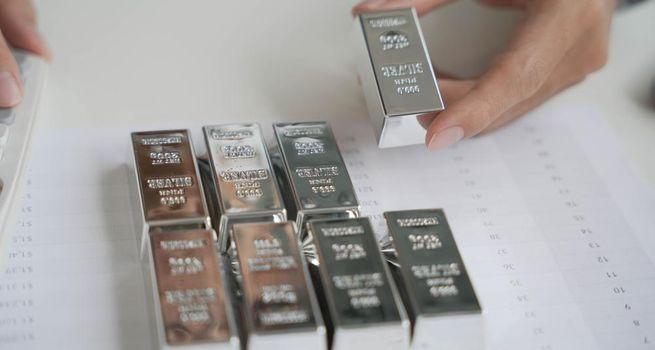
We have learned over decades of observing markets that history doesn’t repeat itself exactly, but it rhymes.
When we see rising geopolitical tension, strained alliances, and the quiet weaponization of capital, we pay attention. Not because it is new, but because it is familiar.
Markets tend to move before the narrative catches up. Recent pre-market strength in silver stocks, (NYSE: EXK), (NYSE:SVM) and (NYSE: FSM) illustrates this pattern, with prices advancing decisively even before the opening bell
Over the past year, silver has climbed steadily, recently hovering near $94.5 per ounce, up ~38% in YTD basis, brushing against all-time highs. Many ask why now?
The answer is not found in a single data point, policy announcement, or technical chart.
It lies in the interaction of power, trust, money, and fear, the same forces that have shaped every major market shift in history.
This is the story of how silver found itself back in the spotlight.
When Political Conflict Becomes Financial Conflict
In the modern world, wars rarely begin with tanks.
They begin with words, tariffs, sanctions, and threats.
President Donald Trump’s renewed threats to acquire Greenland—paired with warnings of new tariffs against European nations opposing the move did something subtle but powerful:
they reminded the world that alliances are conditional.
Europe did not respond with immediate retaliation. Instead, it did something more unsettling: it thought.
Behind closed doors, European policymakers weighed a reality most investors rarely consider, Europe holds nearly $10 trillion in U.S. bonds and equities, much of it controlled by public institutions. Capital, like weapons, can be deployed.
Markets are forward-looking machines.
They don’t wait for conflict; they price the risk of it.
And when political trust weakens, money begins to seek neutral ground.
That is where silver enters the story.
The Nature of Safe Havens
Throughout history, whenever confidence in paper promises declines, people return to things that do not require belief.
Gold has always been the obvious refuge.
Silver, however, plays a more complex role.
Silver is both money and material
a store of value and a critical industrial input.
When geopolitical stress rises, silver benefits from the same instinct that drives investors toward gold:
preserve purchasing power in an uncertain world.
But unlike gold, silver also responds to economic transformation.
This dual identity makes it uniquely sensitive during periods when political instability overlaps with technological change.
That overlap is exactly where we are today.
The Critical Minerals Decision That Changed the Equation
Last year, the United States quietly added silver to its critical minerals list.
This was not symbolic.
It was structural.
Silver is essential to:
- Solar panels
- Electric vehicles
- Semiconductors
- Advanced electronics
- Defense systems
In other words, silver sits at the heart of energy transition and digital infrastructure the same systems governments depend on for economic and military competitiveness.
When the Trump administration later decided not to impose tariffs on critical minerals, including silver, the market understood the signal clearly:
Silver is too important to disrupt.
This exemption reduced policy risk on the supply side while demand pressures continued to build.
Volatility increased, not because silver became unstable, but because its importance became undeniable.
Supply Is Rigid, Demand Is Not
One of the most important principles I’ve learned is this:
Prices move most violently when demand is flexible, but supply is not.
Silver supply is constrained by geology, permitting, capital intensity, and time.
You cannot simply decide to produce more silver next quarter.
Meanwhile, demand is expanding from multiple directions:
- Green energy mandates
- Electrification
- Military modernization
- Investor hedging against currency debasement
This asymmetry creates pressure.
When capital senses that pressure early, it moves ahead of the crowd.
That is what we have been witnessing over the past year.
Currency Debasement and the Silent Tax
Most people experience inflation as higher prices.
But inflation is really about the declining value of money.
Governments burdened with debt rarely default outright.
They choose the quieter path, printing, easing, and gradual debasement.
When interest rates peak and debt servicing becomes politically painful, policymakers face a choice:
- Austerity (rare)
- Restructuring (disruptive)
- Currency debasement (most common)
Markets understand this pattern well.
Silver, historically undervalued relative to gold, benefits disproportionately when investors seek protection against long-term currency erosion rather than short-term crisis.
The rise in silver is not panic.
It is preparation.
The Role of Volatility in Late-Cycle Markets
Recently, silver has experienced sharper daily swings.
This has unsettled short-term traders but attracted long-term allocators.
Volatility does not mean weakness.
It often signals transition, from being ignored to being owned.
As large pools of capital reposition, prices overshoot, pull back, and reset.
This is how markets digest new information.
The key is not the noise, but the direction of structural forces.
Those forces currently favor real assets over financial promises.
Why Silver Miners Are Moving First
When commodities enter a new regime, equities tied to production move before the metal itself stabilizes.
Pre-market activity in silver miners such as:
- Endeavour Silver Corporation (NYSE: EXK) up ~4%
- Silvercorp Metals Inc. (NYSE American: SVM) up ~5%
- Fortuna Mining Corp. (NYSE: FSM) up ~3.5%
reflects this reality.
Mining equities act as leveraged expressions of metal prices, but they also discount:
- Improved margins
- Strategic relevance
- Increased institutional attention
When capital begins rotating toward miners, it suggests belief that higher prices are not temporary spikes, but part of a longer cycle.
Historically, these moves occur when markets transition from skepticism to acceptance.
Capital Wars and the Return of Neutral Assets
We are entering an era where capital itself is geopolitical.
Sanctions, tariffs, asset freezes, and trade restrictions have taught investors a critical lesson:
ownership is only as secure as political alignment.
Silver does not belong to any nation.
It does not carry counterparty risk.
It does not depend on permission.
In a world where financial systems fragment and trust declines, neutral assets gain value not because they yield more, but because they cannot be controlled easily.
This is why silver is rising alongside gold—but often faster.
Epilogue: The Lesson Beneath the Price
The rise of silver over the past year is not about speculation.
It is about systems under stress.
It reflects:
- Shifting geopolitical power
- Weaponized finance
- Structural supply constraints
- Energy transformation
- Currency uncertainty
Silver is not predicting collapse.
It is responding to imbalance.
Markets are storytelling machines.
And the story they are telling right now is simple:
When trust erodes, value returns to what has endured across centuries.
Silver has been here before.
And as history reminds us, it never shines brightest at the beginning of change, but in the middle of it.
That is exactly where we are now.

 Jun 09, 2026



 Please wait processing your request...