
 AU
AU
 UK
UK
 CA
CA
 NZ
NZ
 IND
IND

 US
US

 Share
Share
 X (Formerly Twitter)
 Whatsapp
 Facebook
 LinkedIn
 Telegram
 Email This Article
 Copy Link
 Summarize with AI
 Chat GPT
 Perplexity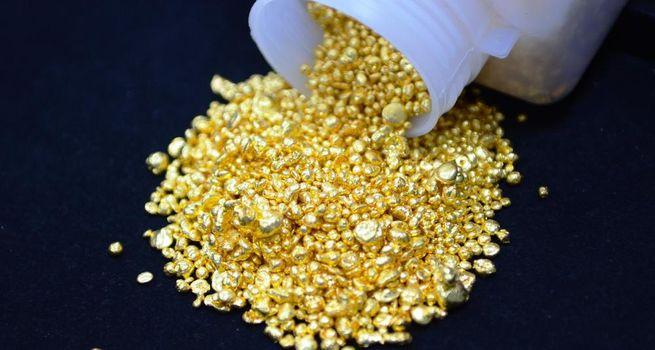
Ray Dalio, the billionaire founder of Bridgewater Associates, has spent decades studying the rise and fall of empires. His latest warning carries the weight of historical pattern recognition: the global monetary order, anchored by American Treasury bonds for nearly eight decades, is breaking apart. The implications are profound, touching everything from the price of copper in Shanghai to pension funds in Stuttgart.
How the Dollar Became the Centre of Global Finance
After the World War II, the US greenback became the centre of the global financial system. American economic strength, political stability, and military power gave other countries confidence. US Treasury bonds were liquid, widely accepted, and easy to trade. They became the default safe asset for central banks around the world.
Over time, this system became self-reinforcing. Countries held dollars because everyone else did. Trade was priced in dollars. Financial markets were built around dollar assets. The dollar became not just a currency, but the backbone of global commerce.
For decades, there was little reason to question this arrangement. There were crises, but none offered a better alternative.
Central Banks Are Changing Their Behaviour
In recent years, central banks have begun to act differently. China has reduced its holdings of US Treasuries from the levels seen a decade ago. Japan has also trimmed exposure as it faces rising domestic costs from an ageing population. Other countries, particularly commodity exporters and emerging markets, have diversified their reserves more actively.
At the same time, central banks have been buying gold at record levels. These purchases are not driven by short term price movements. They are driven by a desire for protection. Gold does not depend on any government’s promise. It cannot be frozen or devalued by policy decisions elsewhere.
This does not mean central banks expect the dollar to collapse tomorrow. It means they are no longer comfortable relying on one asset and one country to the same extent as before.
Eroding Trust Between America and Its Allies
Eroding trust between America and its allies as the main culprit behind this shift. The evidence here is difficult to dismiss.
Trade wars with Europe over steel and aluminium tariffs damaged long standing relationships. Measures that were once unthinkable between allies became reality. Technology restrictions on China then placed allied companies in an uncomfortable position, forcing them to choose between access to American markets and business ties elsewhere.
The chaotic withdrawal from Afghanistan further unsettled partners who felt excluded from decision making despite years of shared commitments. For many governments, this raised doubts about reliability and coordination.
Most importantly, the increasing use of financial sanctions has changed how countries think about risk. The weaponisation of the dollar system made even friendly governments nervous. When Western nations froze Russian central bank reserves in 2022, every finance ministry in the world took notice. The message was clear. Access to reserves depends not only on legal ownership, but also on political alignment.
This moment forced central banks to ask difficult questions. What happens if relationships change. What happens if reserves become inaccessible during a crisis. These concerns were once theoretical. They are now taken seriously.
Why Commodities and Gold Are Rising
Gold prices have risen sharply in recent years. This reflects inflation concerns, but also something deeper. Central banks are buying gold as insurance. They are not trying to make money. They are trying to reduce risk.
Other commodities such as copper, oil, and agricultural products have also risen. However, these moves should not be explained by monetary fear alone. Copper prices reflect supply shortages and rising demand from electric vehicles and power networks. Oil prices are influenced by production discipline and underinvestment. Food prices respond to weather, geopolitics, and energy costs.
It is tempting to see all commodity strength as evidence of a flight from fiat money. That explanation is too simple. Multiple forces are at work at the same time.
The United States Faces a Difficult Fiscal Path
Where Ray Dalio’s warning becomes more convincing is when it turns to US government finances. America runs large and persistent budget deficits. Government debt continues to rise. Interest payments are becoming one of the biggest items in the federal budget.
Foreign central banks are no longer increasing their Treasury holdings. This means domestic investors and the Federal Reserve must absorb more issuance. So far, markets are coping. Treasury auctions continue to succeed. Yields have risen, but they are not out of control.
However, the direction is worrying. Higher interest rates increase debt servicing costs. Relying too much on central bank support risks inflation. Political divisions make long term fiscal planning difficult. None of these problems cause immediate collapse, but together they reduce flexibility.
There Is No Obvious Replacement for the Dollar
Despite its weaknesses, the dollar remains dominant because alternatives are limited. The euro is backed by a group of countries that struggle to act together on fiscal policy. The Chinese currency is restricted by capital controls and limited transparency. Gold cannot support modern trade or financial systems on its own.
The dollar’s power comes from the size of the network built around it. Trade, finance, law, and institutions are all linked to it. Replacing such a system is extremely difficult, even if many countries are unhappy with it.
Removing a reserve currency is easier than replacing one. History shows this clearly.
Investors Should Avoid Extreme Views
For investors, the lesson is balance. Holding some gold and real assets makes sense as protection. It does not make sense as a complete strategy. Gold produces no income, creates no jobs, and funds no innovation.
A portfolio built entirely around fear of collapse is a portfolio betting against adaptation and progress. Sometimes that bet works, but over long periods it usually fails. The world has a strong incentive to fix systems rather than abandon them.
Diversification across assets, regions, and currencies remains the most sensible approach.
This Is a Period of Change, Not Sudden Failure
The global monetary system is not breaking overnight. It is evolving. The world is slowly moving away from a single unquestioned centre towards a more complex structure where the dollar remains dominant but less comfortable.
This transition will be uneven. There will be periods of volatility, inflation scares, and political tension. Markets will overreact at times. Headlines will declare the end of the dollar repeatedly.
History suggests caution with such claims. Similar predictions followed the collapse of Bretton Woods, the oil shocks of the 1970s, and the global financial crisis. Each time, the system adjusted rather than disappeared.
The Real Risk Is Slow Erosion
The greatest danger is not a sudden crash, but slow erosion. If fiscal problems are ignored, if political dysfunction continues, and if financial systems are increasingly used as weapons, confidence may weaken further.
Confidence fades quietly. By the time it becomes obvious, reversing the damage is much harder.
Democracies often delay difficult decisions, but history also shows that they can act decisively under pressure. Whether today’s policymakers will act in time remains uncertain.
A System Under Strain, But Still Standing
Ray Dalio’s warning should be taken seriously, but not literally. The global monetary system is under stress, not in collapse. Central banks are behaving cautiously, not fearfully. Investors should prepare for a more volatile and multipolar world, without assuming disaster is inevitable.
The dollar system is no longer taken for granted. That is an important change. But for now, it remains the foundation of global finance, strained, imperfect, and still standing.


 Jun 09, 2026




 Please wait processing your request...