
 CA
 NZ
 UK
 AU
 IND

 US

 Share
 X (Formerly Twitter)
 Whatsapp
 Facebook
 LinkedIn
 Telegram
 Email This Article
 Copy Link
 Summarize with AI
 Chat GPT
 Perplexity

Key Momentum Shifts
- Micron Leads: MU gained 6.10%, recording the strongest advance among the 10 major Technology stocks.
- AMD Strengthens: AMD rose 4.69%, ranking second and extending strong momentum across semiconductor stocks.
- Intel Advances: INTC increased 4.51%, supported by renewed optimism surrounding its AI and data-centre opportunities.
- Oracle Gains: ORCL climbed 3.08%, helped by positive analyst sentiment and expectations surrounding its upcoming earnings.
- Meta Advances: META increased 1.00%, providing moderate positive momentum among the major technology platforms.
- NVIDIA Edges Higher: NVDA gained 0.84%, while Broadcom added 0.21%.
- Alphabet Weakens: GOOGL declined 1.17%, showing divergence among the largest technology platforms.
- Microsoft and Apple Lag: MSFT fell 2.04%, while AAPL declined 2.51%, making Apple the weakest performer.
- Broad Semiconductor Strength: The strongest gains were concentrated in memory and semiconductor stocks, with the Philadelphia Semiconductor index rising more than 3% during the session.
- Selective Participation: Seven of the 10 stocks gained, but the divergence between semiconductor leaders and mega-cap technology companies remained significant.
The latest US Technology stock performance data for 4 September 2026 shows a strongly divided momentum picture. Micron, AMD and Intel recorded substantial gains, while Oracle also posted a solid advance. The strongest buying interest was concentrated in semiconductor and AI-infrastructure stocks.
At the same time, Apple, Microsoft and Alphabet declined, demonstrating that the technology rally was highly selective rather than broad-based across all major technology companies. The S&P 500 fell 0.38% and the Nasdaq Composite declined 0.29% as stronger-than-expected August employment data lifted Treasury yields and increased expectations of a Federal Reserve rate hike.
Performance Breakdown by Stock
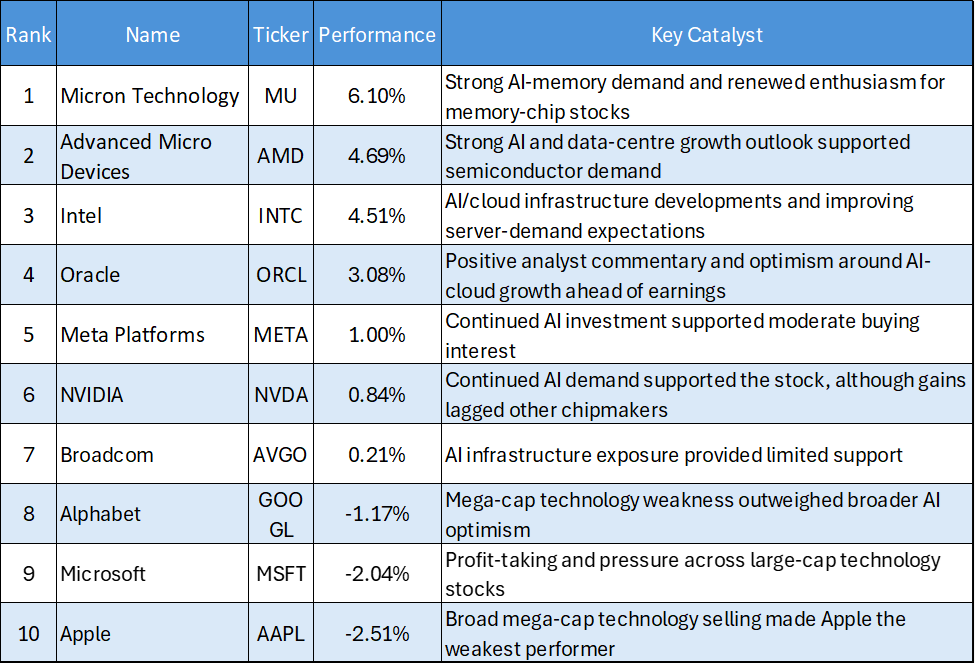
Momentum Breakdown
Micron, AMD and Intel Lead Gains
MU gained 6.10%, recording the largest advance among the 10 stocks. AMD followed with a 4.69% gain, while Intel increased 4.51%.
The strength was closely aligned with the broader semiconductor rally. The Philadelphia Semiconductor Index gained more than 3%, while memory and AI-related stocks significantly outperformed the broader market. Micron's advance was particularly strong as investors continued to focus on AI-driven memory Demand and the favourable supply-demand environment for high-performance memory.
AMD's gains reflected continued investor focus on its expanding AI and data-centre opportunity. Its latest results showed strong Revenue growth and a substantial increase in data-centre revenue, reinforcing the longer-term AI infrastructure narrative.
Intel also benefited from renewed optimism surrounding its role in AI and cloud infrastructure. The company's collaboration with Google to advance AI and cloud infrastructure provided an additional catalyst for the recent rally in the stock.
Oracle Provides Additional Technology Strength
The gain came despite the broader pressure on large-cap technology stocks. Investor interest was supported by positive analyst commentary ahead of Oracle's upcoming Earnings report, particularly regarding the growth outlook for Oracle Cloud Infrastructure and its GPU-as-a-Service business. Morgan Stanley also raised its price target, citing improving expectations for Oracle's AI-related cloud operations.
Oracle's performance therefore added another layer of strength to the AI-infrastructure theme beyond semiconductor stocks.
Meta and NVIDIA Post Moderate Gains
META remained positive despite the broader weakness across several mega-cap technology stocks. Continued Investment in artificial intelligence and the company's exposure to the expanding AI ecosystem provided underlying support.
NVIDIA also finished higher, although its 0.84% gain was considerably smaller than those of MU, AMD and INTC. This divergence is important because it indicates that the semiconductor rally was not uniform. Memory and selected AI-infrastructure companies attracted substantially stronger buying interest than the established AI leaders. Market data showed NVIDIA and Broadcom significantly lagging the strongest semiconductor performers during the session.
Alphabet, Microsoft and Apple Lag
GOOGL declined 1.17%, while MSFT fell 2.04%. Apple was the weakest performer, declining 2.51%.
The weakness occurred within a broader selloff in several mega-cap technology stocks. MarketWatch reported that Apple, Microsoft and Alphabet were among the major technology names weighing on the S&P 500 during the session, while NVIDIA was one of the few major technology companies to remain positive.
The divergence suggests that investors were rotating toward more targeted AI and semiconductor opportunities rather than buying the entire Technology sector indiscriminately.
Technology Momentum Remains Selective
Seven of the 10 stocks finished higher, indicating broadly positive participation. However, the magnitude of the gains varied substantially.
The strongest momentum was concentrated in semiconductors and AI infrastructure, with MU, AMD and INTC all gaining more than 4%. Oracle also benefited from expectations around AI-related cloud growth.
In contrast, several mega-cap technology companies declined despite the strength of the broader AI theme. This selective performance is particularly notable because the stronger-than-expected jobs report pushed Treasury yields higher and increased expectations of a September Federal Reserve rate hike, a development that would normally create additional pressure on high-duration growth stocks.
The fact that semiconductor stocks nevertheless performed strongly suggests that company-specific AI growth expectations remained powerful enough to offset some of the macroeconomic pressure.
Strategic Summary
The US Technology stock performance picture on 4 September 2026 was broadly constructive but highly selective, with seven of the 10 major stocks advancing.
Micron was the standout performer with a 6.10% gain, followed by AMD at 4.69% and Intel at 4.51%. Oracle also delivered strong momentum with a 3.08% advance. The concentration of gains in memory and semiconductor stocks highlights strong investor demand for companies directly exposed to AI infrastructure and data-centre spending.
However, the declines in Apple, Microsoft and Alphabet demonstrate that momentum has not broadened uniformly across the largest technology companies. The next important consideration is whether the semiconductor-led rally expands into the broader Technology group or remains concentrated in AI infrastructure, memory and selected chip stocks.
The structure above follows the attached reference article's ranking, catalyst, momentum-breakdown and strategic-summary format.


 Nov 03, 2026





 Please wait processing your request...