
 AU
AU
 UK
UK
 CA
CA
 NZ
NZ
 IND
IND

 US
US

 Share
Share
 X (Formerly Twitter)
 Whatsapp
 Facebook
 LinkedIn
 Telegram
 Email This Article
 Copy Link
 Summarize with AI
 Chat GPT
 Perplexity
Key Highlights
- Trump's consideration of government stakes in AI companies marks a significant shift in U.S. economic policy towards technology.
- The potential classification of AI infrastructure as national security Assets parallels historical investments in nuclear technology.
- Market reactions indicate a possible 10-15% premium on AI firms named in government discussions.
- Government stakeholdership may provide companies with guaranteed contracts and regulatory protections.
- Industry leaders are set to meet with the White House to further discuss this unprecedented initiative.
Government Stakes and National Security
The recent announcement from former President Trump regarding government stakes in artificial intelligence companies signals a pivotal moment in American Capitalism. This unprecedented consideration, reminiscent of Cold War-era investments in strategic industries, indicates that AI is being conceptualized not merely as a technological advancement but as a component of national security. By positioning AI infrastructure on par with nuclear technology, the government aims to consolidate U.S. dominance in a field where China has made significant strides.
The implications of this shift are profound, suggesting that future investments in AI could be as crucial as those in defense technologies.
Market Reaction: Surprising Yet Logical
Despite the unconventional nature of government Investment in private firms, the stock market's positive response was both rapid and pronounced. This may seem surprising at first glance, but it reflects a strategic rationality among investors. Government stakeholdership typically translates into guaranteed contracts, which can act as a Revenue floor for the companies involved.
In an environment where Volatility in tech stocks is commonplace, a government Partnership could provide a much-needed buffer against foreign competition, thereby reassuring investors. The potential for these firms to secure a significant premium, estimated between 10% and 15%, only adds to the allure of government contracts.
Regulatory Protections and Competitive Advantages
A government stake in AI firms would offer not just financial backing but also regulatory protection. With the U.S. government actively involved, these companies would likely benefit from a more favorable regulatory landscape, deterring foreign competitors from entering the market. This protection could facilitate a more stable environment for innovation, allowing U.S. firms to scale rapidly without the immediate threat of foreign disruption.
As AI technology continues to evolve, the ability to operate with a degree of certainty regarding regulations could be a game-changer for American firms, particularly in a global market increasingly dominated by Chinese competitors.
Monitoring Key Developments
As discussions unfold, investors should closely monitor White House communications for any specific company names that emerge in the context of these government stakes. Historically, companies that receive direct government backing see an immediate surge in their stock prices, as the market reacts to the assurance of government revenues. Any mention of firms such as OpenAI or Anthropic in governmental discussions could lead to significant stock price movements, reinforcing the notion that investors should remain vigilant.
The stakes are high, and the implications for those involved in AI development could set the tone for future market dynamics.
Preparing for a New Era in Tech Investment
The prospect of government stakes in AI companies suggests that a new era of tech investment may be on the horizon. While traditional private investment mechanisms have driven innovation in the tech sector, the blend of governmental interest introduces an entirely new dynamic. Investors may need to recalibrate their strategies to account for the potential influence of government policies on market performance. As the dialogue progresses, the interplay between government intentions and market reactions will be critical in shaping the future landscape of the AI industry.

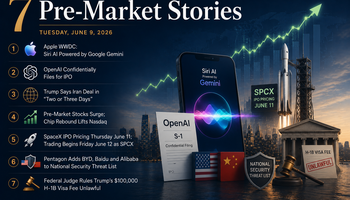
 Jun 09, 2026




 Please wait processing your request...