
 AU
AU
 UK
UK
 CA
CA
 NZ
NZ
 IND
IND

 US
US

 Share
Share
 X (Formerly Twitter)
 Whatsapp
 Facebook
 LinkedIn
 Telegram
 Email This Article
 Copy Link
 Summarize with AI
 Chat GPT
 Perplexity
Highlights
- DoorDash’s revenue grew from USD 2.9 billion in 2020 to USD 10.7 billion in 2024, marking a CAGR of 38.83%.
- Q3 2025 revenue rose 27% year-over-year to USD 3.4 billion, supported by a 21% increase in total orders.
- Adjusted EBITDA for Q3 climbed 41% YoY to USD 754 million, with net earnings up 51% to USD 244 million.
- The company projects Q4 2025 Marketplace GOV between USD 28.9–29.5 billion and adjusted EBITDA of USD 710–810 million.
DoorDash, Inc. (NASDAQ:DASH) operates a platform that facilitates local commerce by connecting merchants with consumers. Its main services include the DoorDash Marketplace, the Wolt Marketplace, and its broader Commerce Platform, which together enable transactions and delivery services across multiple categories.
From 2020 to 2024, DoorDash’s revenue increased from USD 2.9 billion to USD 10.7 billion, representing a compound annual growth rate (CAGR) of 38.83%. This growth was supported by the expansion of its delivery network in restaurants, grocery, and other categories, as well as international operations through Wolt and the addition of Deliveroo. Gross profit rose at a CAGR of 35.91%, reaching USD 5.18 billion in 2024, while the gross margin moderated from 52.6% in 2020 to 48.3% in 2024 due to logistics expenses and reinvestment in infrastructure.
As of Q2 FY2025, DoorDash reported a gross margin of 50.8%, higher than the industry median of 49.5%. Its EBITDA margin stood at 11.4%, and its operating margin at 5.0%, reflecting ongoing spending on platform development and automation.
Q3 Financial Update
DoorDash reported third quarter 2025 (Q3 2025) revenue of USD 3.4 billion, a 27% year-over-year increase. The company’s total orders rose by 21% YoY, and adjusted EBITDA reached USD 754 million, reflecting a 41% jump from the previous year. Net earnings stood at USD 244 million, a 51% YoY rise, while cash inflow from operations was USD 2,010 million.
Cash and cash equivalents at the end of the quarter were USD 3,279 million, a decline of 18.4% compared to the previous year. This outcome resulted from increased reinvestment in technology, autonomy projects, and capital expenditures related to Deliveroo integration.
Company Outlook
DoorDash projects Marketplace GOV for Q4 2025 to be between USD 28.9 billion and USD 29.5 billion, with adjusted EBITDA expected between USD 710 million and USD 810 million. The company’s 2026 plans center on further investment in a unified technology platform, autonomous delivery, and expanded retail fulfillment services.
Top 10 Shareholders
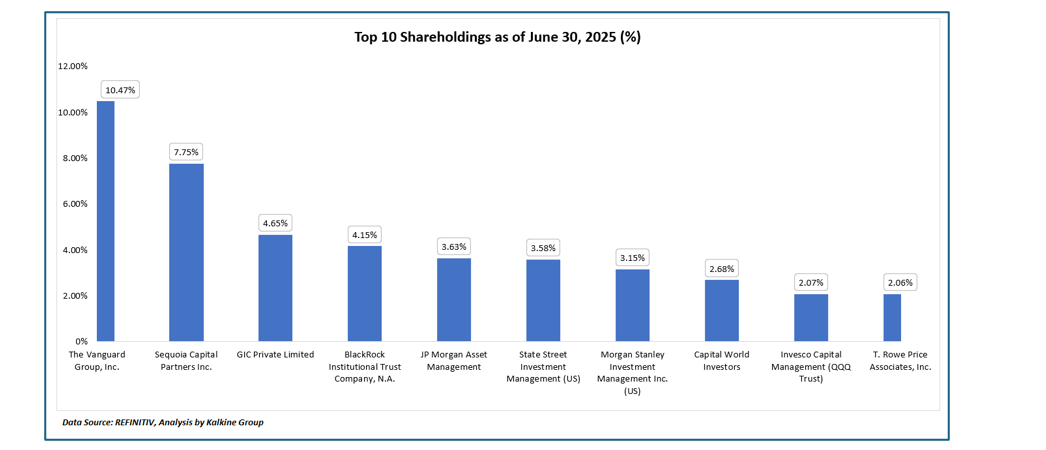
The company’s ownership structure is concentrated, with the top 10 shareholders accounting for approximately 44.18% of the total shareholding. The Vanguard Group, Inc. holds about 10.47%, while Sequoia Capital Partners Inc. owns around 7.75%, making them the two largest shareholders in DoorDash.
Stock Information
As of November 7, 2025, DASH closed at USD 204.25 per share. The stock rose 3.97% intraday, adding USD 7.81. Over the past week, shares declined 15.6%. On a six-month basis, the stock gained 6.3%, and over nine months, it advanced 6.1%. The shares traded between a 52-week high of USD 285.49 and a low of USD 155.40.
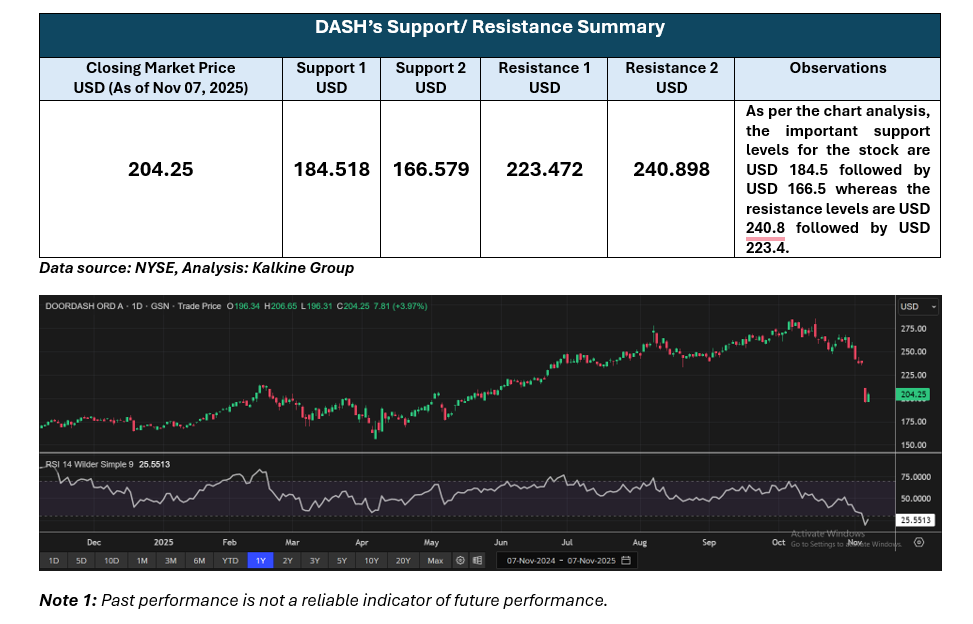
Note 1: Past performance is not a reliable indicator of future performance.
Note 2: The reference data for all price data, currency, technical indicators, support, and resistance levels is 07 November 2025. The reference data in this report has been partly sourced from EODHD/Others.
Technical Indicators Defined
Support: A level at which the stock prices tend to find support if they are falling, and a downtrend may take a pause backed by demand or buying interest. Support 1 refers to the nearby support level for the stock and if the price breaches the level, then Support 2 may act as the crucial support level for the stock.
Resistance: A level at which the stock prices tend to find resistance when they are rising, and an uptrend may take a pause due to profit booking or selling interest. Resistance 1 refers to the nearby resistance level for the stock and if the price surpasses the level, then Resistance 2 may act as the crucial resistance level for the stock.

_06_12_2026_23_00_13_327450.jpg)
 Jun 12, 2026




 Please wait processing your request...