
 AU
AU
 UK
UK
 CA
CA
 NZ
NZ
 IND
IND

 US
US

 Share
Share
 X (Formerly Twitter)
 Whatsapp
 Facebook
 LinkedIn
 Telegram
 Email This Article
 Copy Link
 Summarize with AI
 Chat GPT
 Perplexity
Highlights
- S&P 500 dividends have comprised 31% of total returns since 1926.
- Payout ratios are key for assessing dividend sustainability, with 36% for the S&P 500 as of mid-2024.
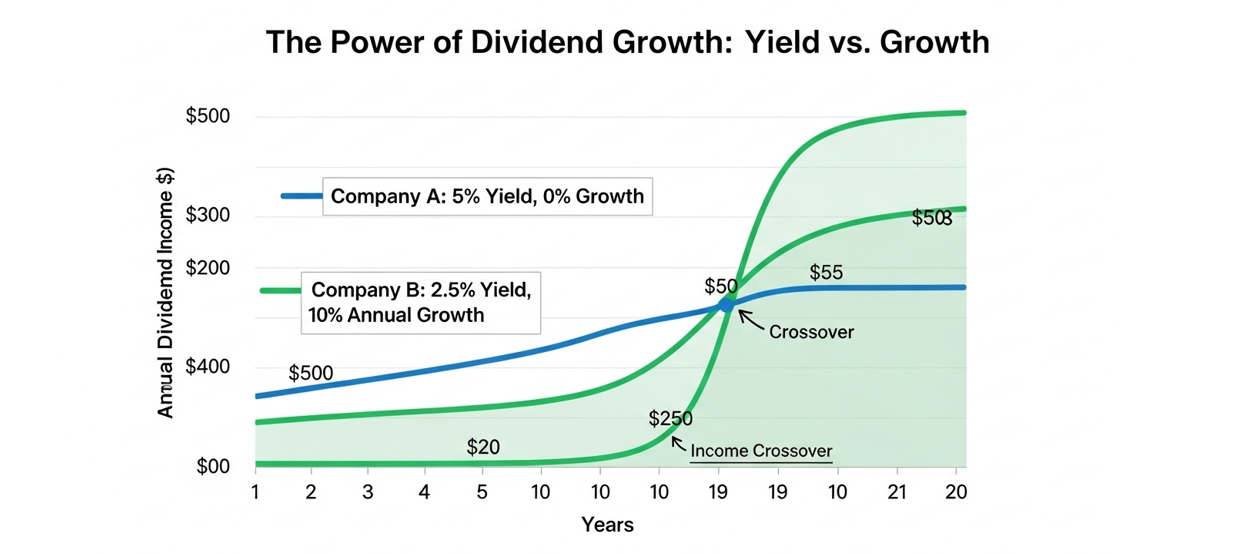
Dividend income accounts for nearly a third of total S&P 500 returns over the past century. While headline yields grab attention, long-term income growth relies on stable fundamentals and sustainable payouts, not merely high initial yields.
Essential Financial Health Metrics for Sustainable Payouts
A dividend’s reliability depends on a company’s ability to sustain payments over time. The dividend payout ratio, which expresses the percentage of earnings paid out as dividends, is a crucial metric for evaluating payout safety. A payout ratio over 80% is sometimes considered risky; ratios between 30%-60% are generally healthier—suggesting both sustainability and room for future growth. As of mid-2024, the S&P 500’s payout ratio stands at 36%, leaving opportunity for upward movement. Other vital indicators include manageable debt, consistent free cash flow, and a steady earnings track record.
Pillars of Consistent Income Growth
Dividend growth candidates often possess strong competitive advantages, prudent capital allocation, and management teams that prioritize shareholder returns.
Strong Business Moats and Competitive Advantages
Companies build “moats” through brand recognition, network effects, and customer loyalty. These help sustain profits and dividends during economic uncertainty.
Prudent Capital Allocation & Management’s Dividend Commitment
Long, uninterrupted dividend histories often reflect management’s dedication. Firms that actively discuss dividends in investor calls and reports signal their strategic importance.
Industry Stability & Growth Prospects
Sectors like consumer staples, healthcare, and utilities provide essential goods and services, typically leading to dependable revenue even during downturns. But future growth is vital; stagnating industries can threaten dividend expansion.
Spotlight: Popular S&P 500 Dividend Stocks for Sustainable Income Growth
NYSE:UPS (United Parcel Service)
United Parcel Service is a global leader in logistics and package delivery, operating an extensive ground and air network. The company faces tariff pressures and operational restructuring but delivered its 16th straight annual dividend increase.
Dividend yield: 7.52%.
NYSE:PFE (Pfizer Inc.)
Pfizer Inc. is a multinational pharmaceutical corporation known for its portfolio of prescription medicines, vaccines, and consumer healthcare products. Despite setbacks with its product pipeline, Pfizer maintained a payout bolstered by new acquisitions targeting future growth. Dividend yield: 6.95%.
NYSE:MO (Altria Group)
Altria Group is one of the largest producers and marketers of tobacco, cigarettes, and related products in the U.S., recognized for brands like Marlboro. Altria’s 56-year track record of increases demonstrates stability, but sector challenges remain.
Dividend yield: 6.56%.
NYSE:VZ (Verizon Communications)
Verizon Communications is a major telecommunications provider, with operations spanning wireless, broadband, and media assets. About 60% of Verizon’s earnings go to dividends, supporting steady income despite high debt levels.
Dividend yield: 7.11%.
NYSE:ARE (Alexandria Real Estate Equities)
Alexandria Real Estate Equities is a specialized real estate investment trust (REIT) focusing on office/lab properties for the life science and biotechnology sector. As a major healthcare REIT, ARE faces construction and inflation headwinds but retains a strong dividend profile.
Dividend yield: 6.82%.
Other consistent leaders include NYSE:MSFT (Microsoft), a dominant force in software and cloud solutions, and NYSE:PG (Procter & Gamble), a global leader in consumer goods. Both firms showcase the traits of enduring dividend growth stocks.
Risks and Important Considerations for Dividend Growth Stock Selection
High payout ratios, declining earnings, or excessive debt can threaten dividends—even among established firms. Market volatility and rising interest rates also impact prices and yields. Vigilant monitoring and long-term discipline remain key to sustained success in building dividend income.


 Jun 29, 2026




 Please wait processing your request...