
 AU
AU
 UK
UK
 CA
CA
 NZ
NZ
 IND
IND

 US
US

 Share
Share
 X (Formerly Twitter)
 Whatsapp
 Facebook
 LinkedIn
 Telegram
 Email This Article
 Copy Link
 Summarize with AI
 Chat GPT
 Perplexity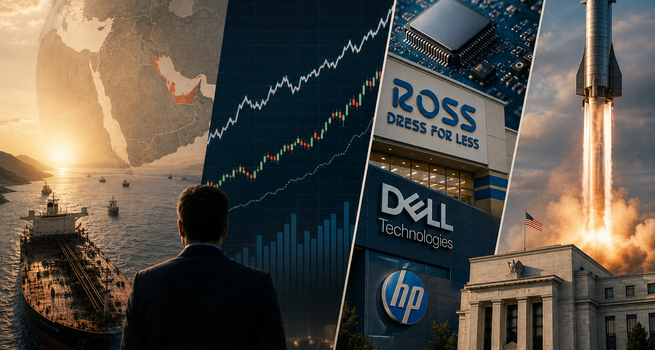
U.S. markets are closed today. NYSE and Nasdaq reopen Tuesday May 26. T+1 settlement means Friday trades settle Tuesday. Futures are sharply higher and oil has collapsed. Here is what moved over the long Memorial Day weekend.
- Iran and Energy: Deal Framework Agreed in Principle but Not Signed; Nuclear Issues Deferred; WTI Below USD 91
Trump posted Saturday that a peace deal had been "largely negotiated," describing a two-phase memorandum of understanding involving the United States, Iran, Saudi Arabia, UAE, Qatar, Pakistan, Turkey, Egypt, Jordan and Bahrain. Phase one reopens the Strait of Hormuz. Phase two covers nuclear and remaining disputes over 30 to 60 days. Iran's foreign ministry confirmed the two-phase structure but said the two sides remain "very far and very close" to an agreement, noting the U.S. had put forth "conflicting stances several times." A senior Iranian source told that Tehran has not agreed to hand over its highly enriched uranium and that the nuclear issue is not part of the preliminary agreement, it is deferred, not resolved.
Trump demanded Iran surrender its uranium stockpile as a core war objective; Iran has agreed only to suspend enrichment for a shorter period than the 20-year moratorium the U.S. seeks and has rejected dismantling nuclear facilities entirely. Rubio at the NATO summit said the U.S. was still awaiting Iran's formal response to the latest terms conveyed via Pakistan: "There's been a little bit of movement, and that's good."
Trump on Sunday told negotiators "not to rush into a deal" because "time is on our side" and confirmed the Hormuz blockade remains "in full force until an agreement is reached, certified, and signed." The U.S. Hormuz blockade has now hit 100 days. Iran authorized 30 to 35 vessels through the strait in the past 24 hours. WTI fell 6.22% to USD 90.96 on Friday, its lowest level since the war began. Brent fell sharply to approximately USD 96.
- The two-phase structure is deliberate: Hormuz reopens before nuclear issues are resolved, removing the single most contentious sticking point from the path to a deal, but also removing Trump's primary Leverage for future nuclear negotiations.
- Even if the deal is signed, analysts note it would take at least four months to return oil flow to 80% of pre-war levels due to the scale of infrastructure disruption caused by the conflict.
- Risk note: Iran has not formally confirmed all U.S.-stated terms; the deal is unsigned; and similar moments of optimism in March and May 2026 collapsed into renewed strikes, the market is pricing peace before it is certified.
- Markets: Futures Sharply Higher as Peace Hopes Drive Risk-On Rally; S&P Set to Open at All-Time High
S&P 500 futures are up 0.97% at USD 7,563.75, Nasdaq futures up 1.45% at USD 29,986.75, and Dow futures up 0.82% at USD 51,076.00 heading into Tuesday's open. The VIX fell 0.36% to 16.70. Sentiment is "upbeat" across U.S. Assets. Japan's Nikkei 225 topped 65,000 for the first time, rallying on Hormuz reopening hopes and the sharp drop in energy costs. Gold rose 0.99% to USD 4,553.67 and silver gained 2.75% to USD 77.55. The S&P 500 enters Tuesday with a potential open above 7,560, which would represent a fresh all-time high if sustained.
A deal that reopens Hormuz would directly reduce the probability of a Fed rate hike by December from approximately 50%, as the primary driver of above-target Inflation would begin to unwind. The Analyst warned over the weekend that oil markets are at "tank bottoms" in Asia with Europe not far behind, a Hormuz reopening would release Supply into an inventory system already near critical lows, potentially causing an overshoot to the downside in oil prices.
- Risk note: equities and futures are pricing a deal before it is signed, introducing a significant gap-down risk on Tuesday if negotiations stall or collapse; the market is structurally long peace heading into a week where the deal could be confirmed or could collapse.
- Friday Earnings Movers: Dell +17%, HP +15%, Skyworks +12%, NetApp +12%, Ross Stores +8%
Friday delivered a broad sweep of strong earnings across AI infrastructure, consumer technology, and off-price retail. Dell Technologies (NYSE: DELL) surged 16.78% to USD 295.19 after reporting record Revenue, record earnings, and a massive AI server Backlog, confirming robust enterprise AI infrastructure Demand.
HP Inc. (NYSE: HPQ) jumped 15.25% to USD 25.24 driven by AI-powered PC demand optimism, positive momentum from Lenovo's strong results as a sector read-through, and pre-earnings buying ahead of the Dividend qualification date.
Skyworks Solutions (NASDAQ: SWKS) advanced 12.08% to USD 82.42 as broader market sentiment improved on Middle East peace hopes, semiconductor sector optimism from government backing, and a risk-on environment.
NetApp (NASDAQ: NTAP) gained 12.44% to USD 139.36 after quarterly earnings beat analyst estimates on continued AI-related infrastructure demand.
Ross Stores (NASDAQ: ROST) rose 8.11% to USD 234.81 after Blowout fiscal Q1 results with revenue and EPS both significantly beating estimates, same-store sales jumping sharply year over year, full-year guidance raised, and multiple analyst price target upgrades.
- Dell's AI server backlog is the most structurally significant data point in the group: it directly confirms that enterprise AI infrastructure demand extends well beyond hyperscalers into corporate data centres, a broadening of the AI spending cycle that supports Nvidia's and Cisco's forward guidance.
- Ross Stores' beat and guidance raise is a direct counterpoint to Walmart's guidance cut the prior Thursday, suggesting the off-price consumer remains resilient even as the mass-market consumer tightens under Iran war inflation.
- Risk note: Friday's movers were partly driven by Iran deal optimism and a risk-on tape; a deal breakdown on Tuesday could reverse some of the sentiment-driven gains, particularly in Skyworks and other macro-sensitive names.
- SpaceX Starship V3: Partial Success on Flight 12; Upper Stage Completes Splashdown, Booster Lost; IPO Roadshow June 4
SpaceX completed the 12th Starship test flight Friday evening from Starbase Pad 2, marking the debut of V3 hardware and the first launch from the new pad. The Ship upper stage successfully deployed dummy satellites into orbit, beamed live video from space, and splashed down vertically in the Indian Ocean. The Super Heavy booster failed to properly execute its boostback burn after stage separation, lost control, and crashed into the Gulf of Mexico. SpaceX said it missed propulsion targets required to confirm the rocket is ready for safe orbital flights and return.
The June 4 roadshow and June 12 Nasdaq listing under ticker SPCX remain on track. The partial success is sufficient for investor confidence: the V3 upper stage performed nominally, the new pad worked, and the booster anomaly was isolated to a single engine relight sequence. NASA administrator Jared Isaacman flew to Starbase and appeared in a flight suit with SpaceX employees. SpaceX has spent more than USD 15 billion on the Starship programme.
- SpaceX has not yet successfully recovered a Super Heavy booster on a V3 flight; full reusability, the central cost reduction assumption in the IPO growth case, remains undemonstrated for the new hardware generation.
- Risk note: a second consecutive booster loss on V3 hardware could draw scrutiny during the roadshow around the timeline for Starlink satellite launch cadence, which depends on Starship becoming fully and rapidly reusable.
- Week Ahead: Iran Deal, Samsung Vote, Nvidia Reaction, SpaceX Roadshow and PCE Define the Week
Tuesday opens with five live catalysts converging simultaneously. The Iran deal framework requires finalisation by the U.S., Iran, and regional parties; any signed agreement or breakdown will be the dominant market event of the week.
The Samsung Electronics union ratification vote closes Tuesday at 10:00 a.m. KST; with 82.86% turnout already recorded and passage broadly expected, a yes vote removes the last residual memory supply chain risk ahead of AI infrastructure season.
Nvidia (NASDAQ: NVDA) will be fully repriced as the market absorbs the long-weekend earnings reaction; the stock fell 1.90% before the holiday. The SpaceX roadshow targeting June 4 means investor meetings begin this week, making it the most active IPO preparation week of the year.
April PCE inflation, the Fed's preferred measure, prints Friday May 30; Goldman Sachs projects 3.3% annualised, materially above the Fed's 2% target, and it will be the first major inflation data point under new Fed chair Kevin Warsh.
- Warsh's first public remarks as chair will be closely parsed for any signal on the June 16 to 17 FOMC meeting; with oil falling sharply over the weekend, the rate hike probability that stood at 50% on Friday could shift materially lower by the time he speaks.
- The House war powers vote, cancelled before the Memorial Day recess, returns in early June; a signed Iran deal before then renders it moot, while a deal collapse makes it the most consequential Congressional vote of the year.
- Risk note: the first trading day after a long weekend with a near-signed Iran deal, an unsettled Nvidia reaction, and a Samsung ratification vote closing simultaneously is structurally the highest single-session event density since Liberation Day in April 2025.

_06_12_2026_23_00_13_327450.jpg)
 Jun 12, 2026




 Please wait processing your request...