
 AU
AU
 UK
UK
 CA
CA
 NZ
NZ
 IND
IND

 US
US

 Share
Share
 X (Formerly Twitter)
 Whatsapp
 Facebook
 LinkedIn
 Telegram
 Email This Article
 Copy Link
 Summarize with AI
 Chat GPT
 Perplexity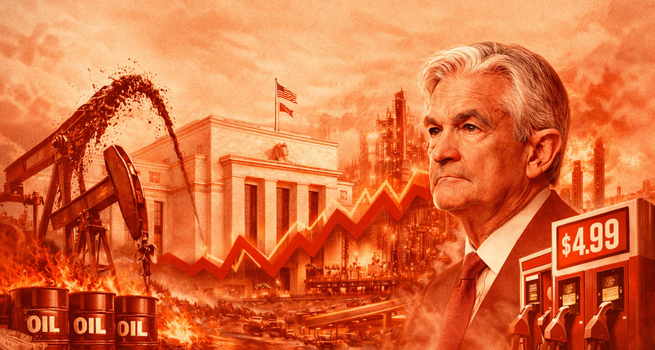
Key Highlights
- The Federal Reserve is expected to keep rates at 3.5% to 3.75% in March 2026
- A surge in oil prices has reintroduced upside risks to inflation
- The labour market is softening gradually but remains resilient
- Policymakers are adopting a cautious “first, do no harm” stance
- Updated projections will be critical in shaping the future rate path
The Federal Reserve is approaching its March meeting with an unusual mix of restraint and unease. Inflation has moderated from its peak, yet it has not convincingly returned to target. Growth has slowed, but not enough to suggest imminent weakness. Into this fragile equilibrium comes a fresh disruption: a sharp rise in oil prices driven by geopolitical tensions involving Iran. The result is a policy dilemma that resists easy answers.
Markets expect the central bank to leave the federal funds rate unchanged at 3.5% to 3.75% for a second consecutive meeting. That decision reflects not confidence in the inflation outlook, but a recognition of the limits of monetary policy in the face of supply shocks. Having already tightened aggressively, the Fed is now reluctant to act prematurely, particularly when the effects of previous rate hikes are still working their way through the economy.
The resurgence in oil prices has complicated what had been a relatively encouraging disinflation trend. Energy costs feed quickly into headline inflation and more gradually into core measures through transport, logistics, and production channels. More importantly, they shape inflation expectations. If households and firms begin to anticipate persistently higher prices, wage demands and pricing behaviour may adjust accordingly, making inflation harder to tame.
Yet responding to such a shock with tighter policy is fraught with risk. Higher interest rates can suppress demand but do little to address supply constraints in energy markets. This creates a familiar tension for central banks: act forcefully and risk unnecessary economic damage, or remain patient and risk allowing inflation to linger. The Federal Reserve appears to be choosing patience, at least for now.
This approach aligns with what might be described as a “first, do no harm” doctrine. After a prolonged tightening cycle, policymakers are acutely aware of the lagged effects of monetary policy. Financial conditions have tightened significantly, credit growth has slowed, and interest-sensitive sectors such as housing have already felt the strain. Moving too aggressively in this environment could tip the balance from moderation to contraction.
The labour market, long a source of strength, is beginning to show signs of fatigue. Job openings have declined steadily, wage growth has cooled, and hiring has become more selective across sectors. However, the adjustment remains orderly. Unemployment is still low, and there is little evidence of widespread layoffs. This suggests that demand is easing rather than collapsing, giving the Fed room to observe rather than react.
Such conditions reinforce the case for a pause. Policymakers are likely to emphasise that the current stance remains restrictive and that the bar for further tightening remains high but not insurmountable. The message will be one of vigilance rather than victory. Inflation has improved, but the job is not yet complete.
Attention will therefore shift to the Fed’s updated economic projections, which will offer a window into how officials are interpreting the evolving landscape. These forecasts are likely to reflect a more complicated outlook. Inflation projections may be revised slightly higher to account for energy prices, while growth forecasts could edge lower as tighter financial conditions weigh on activity. The projected path of interest rates, often summarised in the so-called dot plot, will be scrutinised for any संकेत that the easing cycle may be delayed.
For financial markets, the implications are nuanced. A steady policy rate is largely anticipated, but the tone of the Fed’s communication will shape expectations. If policymakers signal that rates may remain elevated for longer, equity valuations could face renewed pressure, particularly in growth sectors where future earnings are more sensitive to discount rates. Conversely, any hint that the tightening cycle is nearing its end could support risk assets, though such optimism may prove fragile.
Sector dynamics are already reflecting this divergence. Energy companies stand to benefit from higher oil prices, which bolster revenues and cash flows. In contrast, consumer-facing industries face rising input costs and potential demand softness as higher prices erode purchasing power. Financial institutions occupy a more ambiguous position, benefiting from higher rates but facing risks from slower loan growth and potential credit deterioration.
In fixed income markets, the outlook is equally complex. A pause in rate hikes provides some stability, yet uncertainty حول inflation keeps upward pressure on yields. Investors are increasingly weighing the relative attractiveness of bonds versus equities, particularly as higher yields offer more compelling risk-adjusted returns. This shift in capital allocation could become more pronounced if growth slows further.
At a broader level, the current environment underscores the limits of monetary policy in addressing external shocks. The Fed can influence demand, expectations, and financial conditions, but it cannot control geopolitical events or energy supply. This reality necessitates a degree of humility in policymaking, as well as a willingness to adapt as conditions evolve.
Looking ahead, the path of inflation remains the central variable. If the impact of higher oil prices proves temporary and core inflation continues to decline, the Fed may eventually gain the confidence to begin easing policy. However, if inflation remains stubborn or accelerates, the central bank may be forced to reconsider its stance, even at the risk of slowing growth further.
The labour market will also play a critical role. A gradual cooling is consistent with a soft landing, but a sharper deterioration would raise concerns about recession. The interplay between these forces will determine whether the current pause represents a brief interlude or a more prolonged phase of policy stability.
For now, the Federal Reserve is choosing caution over conviction. It is neither declaring victory over inflation nor preparing for imminent easing. Instead, it is holding its ground, aware that the margin for error is narrow and the consequences of missteps are significant. In an environment shaped as much by geopolitics as by economics, such restraint may be the most prudent course.
Conclusion: A Pause That Reflects Uncertainty, Not Resolution
The Federal Reserve’s expected decision to hold rates steady in March 2026 is less a sign of clarity than of complexity. With inflation risks resurfacing through higher oil prices and growth showing early signs of moderation, policymakers are navigating a narrow path. The emphasis on patience reflects both the limits of monetary policy and the uncertainty of the current environment. For investors, the message is clear: the cycle is not yet complete, and the balance between inflation and growth remains finely poised.


 Jun 13, 2026




 Please wait processing your request...