
 AU
AU
 UK
UK
 CA
CA
 NZ
NZ
 IND
IND

 US
US

 Share
Share
 X (Formerly Twitter)
 Whatsapp
 Facebook
 LinkedIn
 Telegram
 Email This Article
 Copy Link
 Summarize with AI
 Chat GPT
 Perplexity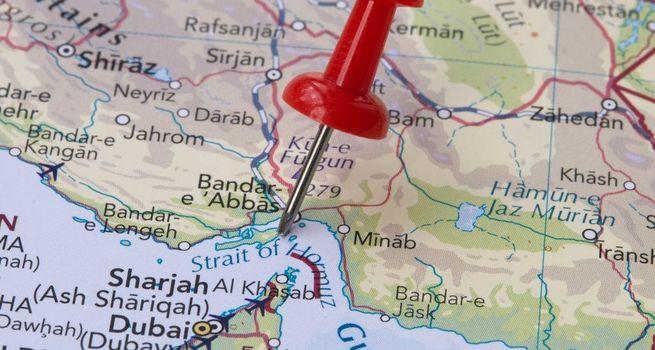
Key Highlights
- Iran has effectively closed the Strait of Hormuz following US-Israeli strikes on February 28 that killed Supreme Leader Khamenei, halting roughly 20% of global daily oil supply
- European nations have unanimously rejected Trump's demands to deploy warships, citing NATO's defensive mandate and the absence of pre-war consultation
- Oil prices have risen 40 to 50 percent since the closure, with risk premiums pricing fragmented Western responses rather than just physical supply disruption
- The episode marks a structural shift in transatlantic relations: US strategic authority is now conditional, not assumed
- Europe's refusal is partly doctrinal and partly arithmetic, with energy exposure, fragile recoveries, and domestic political constraints all reinforcing caution
A Strategic Request Meets Strategic Resistance
Three weeks into the US-Israeli war on Iran, the Strait of Hormuz has become the most consequential 21 miles of water on earth. Since joint US-Israeli strikes on February 28, which killed Iran's Supreme Leader Ali Khamenei, Iran's Islamic Revolutionary Guard Corps has effectively halted shipping through the strait, triggering a collapse in tanker traffic and disrupting roughly 20% of the world's daily oil supply. Oil prices have risen 40 to 50 percent amid repeated Iranian attacks on ships.
Washington's response has been to turn to its allies. President Trump warned that NATO faces a "very bad" future if allies fail to support the United States in securing the strait, arguing it is "only appropriate that people who are the beneficiaries of the strait will help to make sure that nothing bad happens there." He named France, the UK, Germany, China, Japan and South Korea as countries that should step up.
The response has been a near-uniform no.
The Alliance Speaks, Carefully
German Foreign Minister Johann Wadephul said Berlin had no intention of joining military operations, and a spokesman for Chancellor Friedrich Merz stated flatly that the conflict "has nothing to do with NATO." German Defence Minister Boris Pistorius was blunter still: "This is not our war. We have not started it. What does Trump expect a handful or two handfuls of European frigates to do in the Strait of Hormuz that the powerful US Navy cannot do?"
The Germans went further, noting that Washington and Tel Aviv did not consult European allies before launching strikes on Iran, and that Washington had explicitly stated at the start of the war that European assistance was "neither necessary nor desired." The implicit message: you chose this war alone; you cannot now demand we inherit it.
UK Prime Minister Keir Starmer said it had "never been envisioned" to be a NATO mission, and stressed Britain would "not be drawn into the wider war," though London said it was exploring the limited option of deploying mine-hunting drones already in the region. EU foreign policy chief Kaja Kallas, after Monday's Brussels meeting, said there was "no appetite" for extending the bloc's Aspides naval mission to the Hormuz theatre. "Nobody wants to go actively in this war," she said.
The Energy Exposure Driving European Caution
The Strait of Hormuz handles roughly one-fifth of global oil consumption. Europe receives 12 to 14% of its LNG from Qatar through the strait alone. A sustained disruption transmits immediately into crude prices, industrial costs, and inflation across import-dependent economies. Brent crude has already shown elevated volatility in response to the escalation, with risk premiums widening as markets assess supply path uncertainty.
Europe's position is particularly constrained. Despite post-2022 efforts to diversify away from Russian energy, the continent remains sensitive to global oil price shocks. Any operation that raises the probability of a Hormuz disruption, even as a tail risk, carries direct macroeconomic consequences for European governments still managing fragile recoveries and limited fiscal space. Kallas herself noted the closure is already benefitting Russia by pushing energy revenues higher, a direct blow to the economic war effort supporting Ukraine.
This is not abstraction. It is arithmetic. European capitals are weighing the cost of participation against the cost of disruption, and the calculus is no longer automatic.
A Structural Problem, Not Just a Tactical One
Europe's reluctance is not mere political cowardice. It reflects a genuine doctrinal dispute about what NATO is. European leaders have consistently maintained that NATO was established as a collective defence mechanism to protect the territorial integrity of member states, not to project force beyond its borders in wars of choice. Since the current conflict stems from US and Israeli strikes on Iran, Article 5 does not apply.
There is also a frank assessment of military utility. The Strait of Hormuz is shaped by Iran's asymmetric capabilities: anti-ship missiles, naval drones, fast attack boats. Even the US Navy, with its overwhelming superiority, is finding it hard to impose its will. European leaders ask what a comparatively limited naval presence could realistically achieve. US Energy Secretary Chris Wright acknowledged that the US Navy itself is not yet ready to escort tankers through the Strait, an admission that undercuts Washington's moral pressure on allies to act.
What makes this moment analytically significant is not the hesitation itself, but what it reveals about the underlying architecture of Western alliances. US strategic direction once functioned as a sufficient anchor for allied participation. That model is under visible strain. France, Germany, and others are now applying a domestic economic and political filter before committing, requiring explicit answers on scope, duration, and endgame. The result is a shift from automatic alignment to conditional cooperation. US influence has not disappeared. It has become contingent.
The Bigger Fracture
What is truly being tested here is not tactics but trust. When Starmer earlier considered sending British aircraft carriers to the Middle East, Trump told him not to bother, writing on Truth Social: "We don't need people that join Wars after we've already won!" Having been told to stay out, allies are understandably reluctant to be summoned back in when the war turns costly.
The irony is NATO was created as a defensive alliance. It was not designed for one of the allies to go on a war of choice and then oblige everybody else to follow.
Europe is not walking away from NATO. But it is drawing a line: burden-sharing cannot flow in only one direction, and consultations cannot be optional when wars are being launched and mandatory when consequences arrive.
Market and Investment Implications
Energy markets are already internalising this dynamic. Sustained risk premiums in oil reflect not just the probability of physical disruption, but growing uncertainty about whether Western responses to Middle East escalation will be coordinated or fragmented. Fragmentation is, itself, a risk factor.
In currency markets, the dollar retains its safe-haven function, but the erosion of US-led coalition reliability introduces longer-term questions about capital flows. Defense spending patterns will likely diverge: the US may continue expanding commitments; Europe will adopt a more selective posture, concentrating on domestic security priorities over power projection. This divergence has practical implications for defense contractors, supply chains, and industrial investment planning across NATO economies.
Conclusion
The Hormuz episode does not signal the end of US global leadership. It signals the end of unquestioned strategic authority within allied frameworks. Allies are now guided by domestic economic realities and political constraints, not the assumption of shared interest.
A more fragmented geopolitical landscape raises the baseline cost of coordination, sustains energy market risk premiums, and reshapes the incentive structures driving capital allocation across defense, currency, and commodity markets. Multipolar does not mean chaotic. But it does mean that influence must now be earned in each instance, not inherited from the last.
FAQ
- Why has the Strait of Hormuz been closed?
Following US-Israeli strikes that killed Iran's Supreme Leader Khamenei on February 28, Iran's IRGC declared the strait closed and began attacking vessels attempting to transit it. On March 2, tanker traffic fell to effectively zero.
- Why is the Strait so critical for global markets?
The strait handles roughly 20% of global oil and LNG trade. Any sustained disruption transmits directly into crude prices, inflation, and industrial activity worldwide. Europe alone receives 12 to 14% of its LNG through it from Qatar.
- Why won't Europe send warships?
Europe argues that NATO's mandate is defensive and territorial, that no consultation took place before the war began, and that a small European naval presence would offer minimal military value, a point reinforced by the US Navy's own admission that it is not yet ready to escort tankers.
- Is any country joining the US coalition?
Trump claimed "numerous countries" have pledged support but declined to name them. Australia, Japan, Spain, Sweden, Italy, Greece and most major European powers have said they will not send military ships.
- How could this affect oil prices and investments?
Oil markets are likely to sustain elevated risk premiums even without direct supply disruption: traders are pricing the probability of fragmented Western responses, not just physical chokepoint risk. Investors should monitor Brent crude spreads, European defense spending divergence, and the coherence of US strategic communication as leading indicators.
- What could restore transatlantic coordination?
Three conditions could re-anchor allied alignment: a clear and bounded articulation of US strategic objectives, a defined operational scope with explicit escalation limits, and a demonstrable direct threat to European economic or security interests. Absent these, future US-led initiatives should be expected to encounter similar delays.


 Jun 13, 2026




 Please wait processing your request...