
 AU
AU
 UK
UK
 CA
CA
 NZ
NZ
 IND
IND

 US
US

 Share
Share
 X (Formerly Twitter)
 Whatsapp
 Facebook
 LinkedIn
 Telegram
 Email This Article
 Copy Link
 Summarize with AI
 Chat GPT
 Perplexity
Index Update: The S&P 500 closed 2025 with a 16% gain, while the Dow Jones rose 13% and the Nasdaq surged nearly 20%, marking the third consecutive year of double-digit returns. Despite a weak finish in the last trading sessions, all three indexes hit record highs during December, driven largely by AI-related stocks and strong tech sector momentum. For example, Alphabet and other AI-linked firms contributed significantly to the Nasdaq’s rally. Looking ahead to 2026, investor sentiment is expected to hinge on Fed rate cuts, labor market softness, and the appointment of a new Fed chair
Market Movers: On the final trading day of 2025, U.S. equities closed mixed as investors wrapped up a volatile year. Among the top gainers, Nvidia Corp rose over 2%, continuing its strong momentum from AI-driven demand, while Meta Platforms advanced nearly 1.5% on optimism around advertising growth. On the downside, Tesla Inc slipped more than 3% as concerns about slowing EV demand weighed on sentiment, and Apple Inc fell about 1.2% following reports of softer iPhone sales in China.
Commodities Update: Crude oil prices remained under pressure at the start of 2026, with WTI trading near $57.5 per barrel and Brent around $61 per barrel. Both benchmarks had just recorded their steepest annual declines since 2020, as oversupply concerns and geopolitical tensions—including Ukraine-Russia strikes on energy facilities—kept markets volatile. Meanwhile, gold prices slipped below $4,330 per ounce, though they remain close to historic highs after a remarkable 65% surge in 2025, fueled by Fed rate cuts and strong central bank demand. Silver hovered near $72 per ounce, holding elevated levels despite profit-taking, following a record-breaking 150% rally last year driven by tight supply. In industrial metals, copper futures eased to about $5.7 per pound, yet the metal capped its strongest annual gain since 2009, rising more than 40% on supply disruptions and robust demand linked to the energy transition and AI-related infrastructure.
Macro Updates: The U.S. Dollar Index (DXY) started 2026 at 98.39, slightly higher after its biggest annual drop in eight years (down 9.4% in 2025). The weakness stemmed from tariff disruptions, narrowing yield advantages, and fiscal concerns. Traders now expect two Fed rate cuts in 2026, with markets closely watching the appointment of a new Fed chair
Bonds Commentary: The 10-year U.S. Treasury yield held at ~4.15% on January 2, 2026, little changed from year-end levels. Yields fell about 45 basis points in 2025, reflecting expectations of further Fed easing. For example, the Fed’s December minutes showed policymakers leaning toward more cuts if inflation continues to cool, though divisions remain over timing
Futures Update: On the first trading day of 2026, U.S. stock index futures staged a rebound after late-December weakness. S&P 500 futures advanced 0.6%, while the Nasdaq-100 gained 1%, and the Dow Jones added 0.4%. This early-year recovery reflected renewed investor appetite for risk, particularly in technology stocks, reversing the muted sentiment that had weighed on markets at the close of 2025.
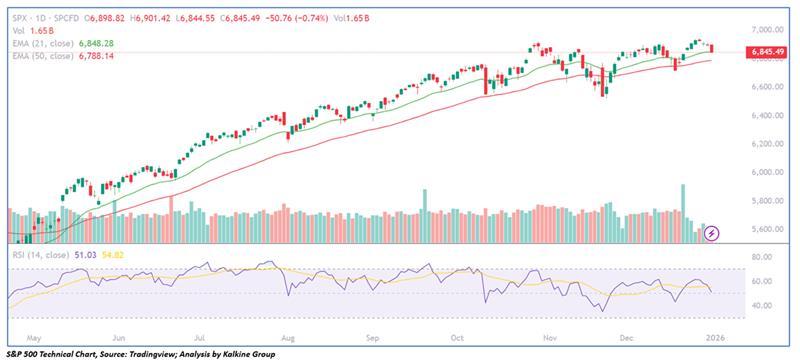
Following a decline in recent sessions, stocks continued to weaken during New Year’s Eve trading on Wednesday. All major averages experienced significant declines throughout the session. The S&P 500 fell by 50.76 points, or 0.74%, closing at 6,845.49. From a technical standpoint, the index is currently near a crucial support level and could potentially rebound in the next session. The 14-day Relative Strength Index (RSI) remains close to the midpoint, suggesting that some buying momentum may develop in the near term. Key support is situated around 6,785, with resistance anticipated near 6,944.


 Jun 05, 2026




 Please wait processing your request...