
 CA
 NZ
 UK
 AU
 IND

 US

 Share
 X (Formerly Twitter)
 Whatsapp
 Facebook
 LinkedIn
 Telegram
 Email This Article
 Copy Link
 Summarize with AI
 Chat GPT
 Perplexity
Key Highlights
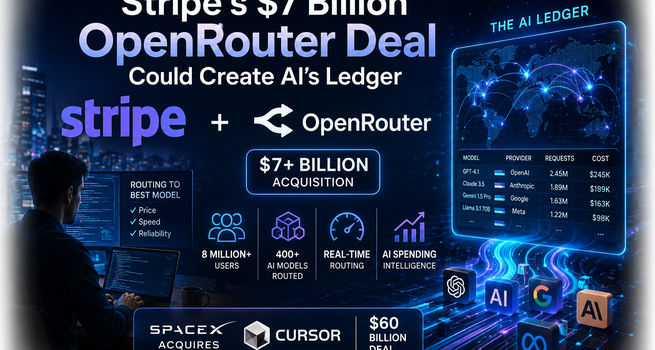
- Stripe has agreed to acquire OpenRouter, the AI model-routing startup, in a deal valued at more than $7 billion.
- OpenRouter routes developer requests across more than 400 AI models for roughly 8 million users, letting traffic shift automatically based on price, speed, and reliability.
- The reported price is more than five times the $1.3 billion valuation OpenRouter carried after a $113 million funding round just months earlier.
- The deal follows SpaceX's $60 billion purchase of the AI coding tool Cursor days earlier, underscoring how fast the market for the software layer between people and AI models is consolidating.
Stripe has agreed to acquire OpenRouter, the startup that routes developer traffic across the AI industry's growing pile of models, in a deal reportedly valued at more than $7 billion. The price lands just months after OpenRouter was valued at a small fraction of that figure, and it arrives in the same week that SpaceX closed a separate $60 billion purchase of the AI coding tool Cursor, a pair of deals that together signal how aggressively companies are moving to own the layer that sits between everyday users and AI models.
What OpenRouter Actually Does
OpenRouter solves a problem that has emerged as the number of usable AI models has exploded: pricing shifts constantly, new versions ship on a near-weekly basis, and quality varies from one release to the next. Rather than wiring an application directly into a single AI provider, a developer can connect once to OpenRouter, and the platform routes each request to whichever of its more than 400 connected models makes the most sense on price, speed, and reliability at that moment. If a provider raises prices or has a rough patch in output quality, traffic can shift elsewhere without anyone touching the underlying application code. That flexibility has made OpenRouter the most widely adopted version of this idea, with a user base numbering roughly 8 million.
A Founder's Second Act
OpenRouter's chief executive, Alex Atallah, is not new to building fast-moving markets. He previously co-founded OpenSea, the NFT marketplace that raised more than $400 million before its usage collapsed as the broader crypto market cooled. Atallah stepped away from that company in mid-2022 and had OpenRouter running within roughly a year. The gap between OpenSea's decline and OpenRouter's reported sale is now measured in a few short years, a timeline that says as much about how quickly value can move in AI as it does about Atallah himself.
The Math Behind the Price
OpenRouter raised a $113 million funding round in May at a valuation of roughly $1.3 billion. Roughly three months later, the reported Acquisition price sits at more than five times that figure. Read one way, that jump is evidence that value in AI infrastructure is compounding faster than typical funding cycles can capture. Read another way, it is a sign of how unsettled pricing still is in this corner of the market, since earlier discussions had reportedly floated a figure closer to $10 billion before the number that ultimately emerged came in lower.
Why the Data Matters More Than the Software
The more interesting explanation for Stripe's willingness to pay this price may have less to do with routing technology and more to do with visibility. Card networks do not just move money between banks; they can see, in real time, where consumer spending is concentrated, often weeks before that shows up in corporate Earnings and months before it appears in official government data. That real-time view is valuable enough that economists and Investment firms pay for access to it. A model router sees an equivalent signal for artificial intelligence: which models are being used, how usage shifts as prices and quality change, and where developer Demand is heading before any of that becomes public information. For a payments company already built around extracting value from transaction visibility, owning that kind of running ledger of AI activity may be the real prize.


 Oct 28, 2026





 Please wait processing your request...