Key Highlights
- KLA Corp. closed at $244.49 on June 23, falling $24.67, as the Philadelphia Semiconductor Index dropped nearly 8% across the session.
- The stock had surged 112% year-to-date and 47% in the prior month, having completed a 10-for-1 stock split, leaving it exposed to elevated profit-taking risk.
- South Korea's Kospi fell 10%, with Samsung and SK Hynix each dropping more than 12%, reducing near-term visibility on equipment orders from major memory manufacturers.
- KLA's process control tools are used in leading-edge logic and memory fabs globally, making its revenue directly sensitive to capex decisions at top-tier chipmakers.
KLA Corp. (NASDAQ:KLAC) closed at $244.49 on June 23, 2026, declining 9.17% as the semiconductor equipment sector suffered one of its sharpest single-session declines in recent months.
KLA had entered the session carrying unusually elevated positioning risk. The stock had surged approximately 112% year-to-date and roughly 47% over the prior month alone, propelled in part by post-split enthusiasm following a 10-for-1 stock split that had expanded its retail accessibility. At those levels, even a moderate sector-wide catalyst was sufficient to trigger a disproportionate pullback.
The session's primary driver was a 10% decline in South Korea's Kospi, which pulled Samsung Electronics and SK Hynix each lower by more than 12%. Both companies are significant users of KLA's inspection and metrology equipment, and their sharp declines raised concerns about the near-term timing of planned equipment purchases.
At the broader level, investor concern about the pace of debt-funded AI infrastructure spending added to the risk-off mood. The Alphabet leadership news contributed to a reassessment of hyperscaler AI capex trajectories, which had been the key demand narrative supporting expanded valuations across the equipment space.
KLA's 52-week low of $83.22 contrasts sharply with its pre-selloff high of $269.90, illustrating how dramatically equipment valuations had re-rated during the AI buildout cycle. The company's process control tools, including optical inspection platforms and X-ray metrology systems, remain critical to advanced logic and HBM memory production.
FAQs
Q: What does KLA Corp. do?
A: KLA designs and manufactures process control and yield management equipment for semiconductor manufacturers, supplying inspection, metrology, and defect review systems that help chipmakers identify and eliminate production defects at advanced process nodes.
Q: Why did KLA's stock fall so sharply on June 23?
A: KLA had surged roughly 112% year-to-date and completed a 10-for-1 stock split, leaving it technically vulnerable. The South Korean memory crash, combined with AI spending concerns, triggered broad profit-taking across the semi equipment sector.
Q: Is KLA's business directly tied to AI?
A: KLA benefits from AI indirectly through expanded capex at logic foundries and memory producers building out HBM and advanced packaging capacity. Its process control tools are mandatory for advanced node production regardless of end demand.
Q: What is the Philadelphia Semiconductor Index?
A: The Philadelphia Semiconductor Index tracks 30 of the largest US-listed semiconductor companies and is widely used as a benchmark for the semiconductor industry's equity performance.
Download Free Report – Explore 3 Stock Ideas & Industry Insights
Unlock 3 stock ideas and key industry insights in our free report. This information is general in nature and does not consider your personal objectives, financial situation, or needs. It is not financial advice.
All investments involve risk—consider independent advice before making any investment decisions.
View 3 Research Reports
Disclaimer:
Kalkine Equities LLC, with Delaware File Number 4697384, Foreign Qualification Registration in California File Number 202109211078, and Texas File Number 805521396, is authorized to provide general advice only. The information on https://kalkine.com/ does not take into account any of your investment objectives, financial situation or needs. You should consider the appropriateness of advice taking into account your own objectives, financial situation and needs and seek independent financial advice before making any financial decisions. The link to our Terms and Conditions and Privacy Policy has been provided for your reference. On the date of publishing the reports (mentioned on the website), employees and/or associates of Kalkine do not hold positions in any of the stocks covered on the website. These stocks can change any time and readers of the reports should not consider these stocks as advice or recommendations later.

 AU
AU
 UK
UK
 CA
CA
 NZ
NZ
 IND
IND

 US
US

 Share
Share
 X (Formerly Twitter)
 Whatsapp
 Facebook
 LinkedIn
 Telegram
 Email This Article
 Copy Link
 Summarize with AI
 Chat GPT
 Perplexity


 Jun 24, 2026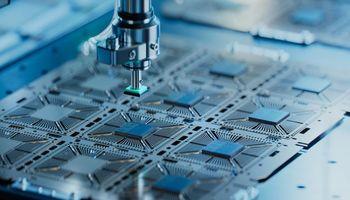


 Please wait processing your request...