
 CA
 NZ
 UK
 AU
 IND

 US

 Share
 X (Formerly Twitter)
 Whatsapp
 Facebook
 LinkedIn
 Telegram
 Email This Article
 Copy Link
 Summarize with AI
 Chat GPT
 Perplexity

Key Highlights
● Alphabet raised 2026 capex guidance to $195B-$205B.
● Quarterly capex itself came in below consensus at $51.36 billion.
● Free cash flow was negative at roughly minus $9 billion.
● Google Cloud revenue beat estimates at $30.71 billion.
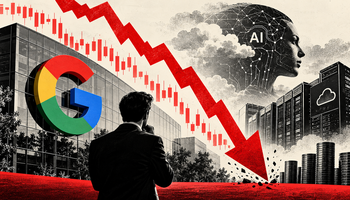
Alphabet raised its 2026 capital spending forecast to as much as $205 billion in a report that also showed negative free cash flow and an earnings miss, sending its shares sharply lower in extended trading.
Alphabet (NASDAQ:GOOGL) gave investors a jolt on Wednesday, October 28, when it raised its 2026 capital spending forecast to between $195 billion and $205 billion, a plan that landed alongside an earnings miss and negative free cash flow. Earlier, in the regular session, Alphabet's Class C shares had risen to close at $321.89.
Spending More, Earning Less
The higher capex forecast extends Alphabet's investment in AI computing capacity, from data centers to custom chips. The quarter's numbers also showed cash generation under pressure as that spending continues. Free cash flow turned negative, at roughly minus $9.06 billion by reported figures.
Earnings per share came in at $2.12, well short of forecasts that sources put at $2.99 or $3.03. Net income fell to $26.17 billion from $34.90 billion a year earlier, with a loss on equity stakes among the factors, according to reports. Revenue of $127.6 billion grew at a double-digit pace but fell just short of the $127.9 billion expected.
A Quarter of Lower Spending, a Year of More
There was a twist. Capital expenditure in the third quarter itself was $51.36 billion, below the $55.78 billion analysts had expected. The concern was less about what Alphabet spent in the quarter and more about the bigger commitment for the full year.
The payoff case rests on businesses like Google Cloud, whose revenue reached $30.71 billion, beating the $29.1 billion forecast. Alphabet also said its Gemini app has reached 1 billion users.
The AI Capex Debate
Alphabet's report put a spotlight on a debate that has hung over markets all autumn: how long the AI spending boom can last, and whether it will generate adequate returns. BCA Research's Peter Berezin said he thinks the market is heading for an AI capex bust, though probably not until 2028.
Fed Chair Kevin Warsh, speaking after the central bank left its benchmark rate range unchanged, described capital spending as not just strong but broadening. Microsoft (NASDAQ:MSFT), reporting at the same time, rose after the bell on a revenue beat and accelerating Azure growth, showing investors are drawing sharp distinctions between hyperscalers.
What to Watch
During the regular session, the AI-infrastructure trade was in full swing. Vertiv (NYSE:VRT) soared, Oracle (NYSE:ORCL) jumped after its investor day and the Philadelphia Semiconductor Index rose for a fourth straight day to 11,684.00. After hours, Nvidia and Micron (NASDAQ:MU) dipped in sympathy with Alphabet, and Nasdaq-100 futures pointed lower overnight.
The key question is whether Alphabet's higher spending plan sparks a broader reassessment of AI capex, or whether investors view it as a sign of durable demand for suppliers. Amazon (NASDAQ:AMZN) reports after Thursday's close, followed by Meta (NASDAQ:META) and Apple (NASDAQ:AAPL) later this week.

 Oct 29, 2026





 Please wait processing your request...