
 AU
AU
 UK
UK
 CA
CA
 NZ
NZ
 IND
IND

 US
US

 Share
Share
 X (Formerly Twitter)
 Whatsapp
 Facebook
 LinkedIn
 Telegram
 Email This Article
 Copy Link
 Summarize with AI
 Chat GPT
 Perplexity
Key Highlights
- Broadcom generated free Cash Flow of $10.262 billion in Q2 FY2026, at a potential annualised run rate of over $40 billion.
- Free cash flow represented 46% of Q2 Revenue of $22.187 billion — an exceptional conversion ratio at this scale.
- For the first two fiscal quarters of FY2026, cumulative free cash flow was $18.272 billion, up 47% year-over-year.
- Capital-expenditure/">Capital Expenditure of $231 million in Q2 confirms the fabless model's structural advantage in cash generation.
- Cash and cash equivalents stood at $19.628 billion at May 3, 2026, up from $16.178 billion at the start of the fiscal year.
The history of Wealth creation in Equity markets is, at its core, a history of free cash flow compounding. Companies that generate cash far in excess of what they need to sustain their Business, and that deploy that cash intelligently, tend to create disproportionate long-term value. Broadcom Inc. (Nasdaq: AVGO) is generating free cash flow at a rate that demands serious analytical attention.
In Q2 FY2026, Broadcom produced $10.262 billion of free cash flow in thirteen weeks. This requires a business with genuine pricing power, limited capital intensity, and a customer base growing Demand at double-digit rates. Broadcom has all three.
The FCF Conversion Story
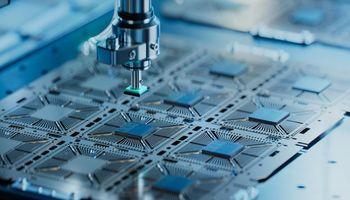
Free cash flow of $10.262 billion on revenue of $22.187 billion represents a conversion ratio of 46%. This is among the highest FCF yields on revenue of any large-cap technology company globally. The explanation lies in two factors: the fabless semiconductor model, which externalises Manufacturing capital to contract manufacturers, and the infrastructure software business, which generates recurring subscription revenues with minimal incremental cost.
Capital expenditure of $231 million in Q2 against revenue of $22.187 billion is a ratio of approximately 1%. For context, capital-intensive semiconductor manufacturers spend 20-30% of revenue on capex. Broadcom's design-led model means the capex burden falls on TSMC and other foundries, not on Broadcom's Balance Sheet.
The Half-Year Picture
For the first two fiscal quarters of FY2026, Broadcom generated $18.272 billion of free cash flow. This compares with $12.424 billion in the equivalent period of FY2025, representing 47% growth. The rate of FCF growth is broadly tracking revenue growth, meaning margins are held even as the business scales rapidly.
Cash on the balance sheet at May 3, 2026 stood at $19.628 billion, up from $9.472 billion at the equivalent point in FY2025. Despite paying dividends of $6.178 billion and repurchasing $8.45 billion of common stock in H1 FY2026, the cash balance has grown. This is only possible when free cash flow generation substantially exceeds capital returns to shareholders.
What the FCF Trajectory Implies for Value
If Q3 FCF tracks at similar conversion ratios (approximately 46% of guided revenue of $29.4 billion), Q3 FCF could approach $13.5 billion. An annualised run rate of $50 billion or more in free cash flow is within the range of plausibility. The cash flow is real, it is growing, and it is being generated with minimal capital reinvestment. For investors applying a free cash flow Yield framework to valuation, the starting number is compelling on any reasonable assumption of durability.
Disclaimer: This article is for informational purposes only and does not constitute financial advice or Investment recommendation. All data sourced from Broadcom Inc. Q2 FY2026 Earnings release dated June 3, 2026. Past performance is not indicative of future results. Investors should conduct their own Due Diligence.

 Jun 10, 2026
_06_10_2026_16_19_12_350113.jpg)
_06_10_2026_16_18_07_538577.jpg)

_06_10_2026_16_14_42_854984.jpg)
 Please wait processing your request...