
 CA
 NZ
 UK
 AU
 IND

 US

 Share
 X (Formerly Twitter)
 Whatsapp
 Facebook
 LinkedIn
 Telegram
 Email This Article
 Copy Link
 Summarize with AI
 Chat GPT
 Perplexity

Key Highlights
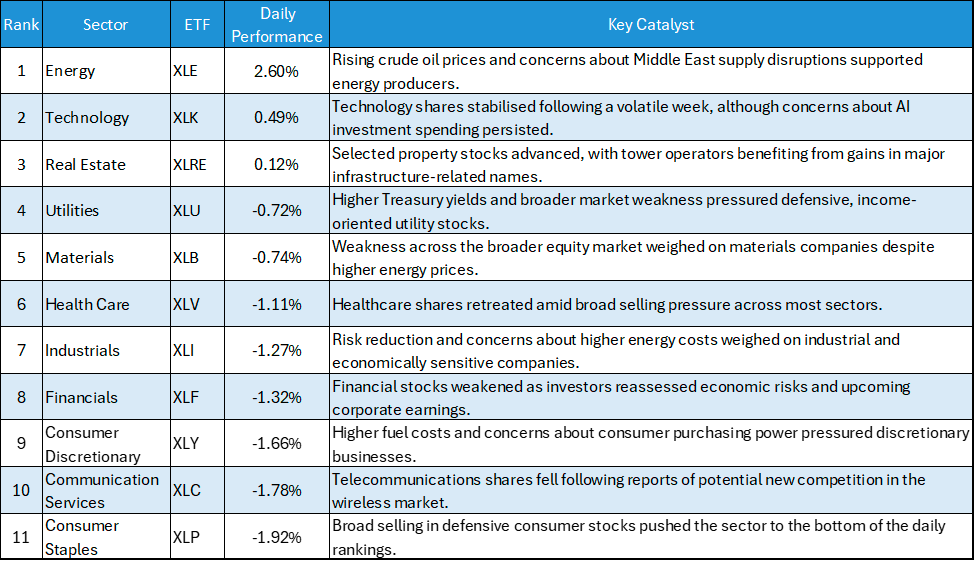
- Energy (XLE) surged 2.60%, leading all eleven US sectors as rising oil prices heightened concerns about Middle East Supply disruptions.
- Technology (XLK) advanced 0.49%, supported by a modest recovery in technology shares following a volatile week for artificial intelligence investments.
- Real Estate (XLRE) edged up 0.12%, making it the third sector to finish in positive territory.
- Eight of eleven sectors declined, reflecting continued selling pressure across most of the US Equity market.
- Communication Services (XLC) dropped 1.78%, while Consumer Discretionary (XLY) lost 1.66% amid weakness in telecommunications and consumer-related stocks.
- Consumer Staples (XLP) recorded the largest decline, falling 1.92%, as defensive shares came under pressure.
- The performance gap between the strongest and weakest sectors reached 4.52 percentage points.
The US equity market remained under pressure on Friday, 23 October 2026, as investors assessed surging oil prices, geopolitical risks and uncertainty surrounding artificial intelligence Investment spending. The S&P 500 declined 0.52%, while the Dow Jones Industrial Average fell 1.23% and the Nasdaq Composite slipped 0.21%. Energy was the standout performer, supported by rising Crude Oil prices and concerns about potential supply disruptions in the Middle East. Technology also advanced modestly, but weakness across consumer, financial and communication-related stocks highlighted the uneven nature of market sentiment. Investors additionally looked ahead to a busy corporate Earnings calendar and the Federal Reserve's forthcoming policy decision.
Daily US Sector Performance Summary
Energy Leads as Oil Supply Concerns Intensify
Energy (XLE) gained 2.60%, comfortably outperforming every other sector. The advance coincided with a sharp rise in crude oil prices after attacks in Saudi Arabia raised fresh concerns about disruptions to Middle East energy supplies. Brent Crude climbed to its highest level since late April, providing a favourable pricing backdrop for oil and gas producers and related service companies.
Oilfield services company SLB also advanced after reporting stronger-than-expected quarterly profit, reinforcing buying interest in parts of the energy industry. Nevertheless, elevated oil prices create a broader economic trade-off: they can improve Revenue prospects for energy producers while increasing transportation, Manufacturing and household expenses elsewhere in the economy.
Technology Stabilises While Real Estate Edges Higher
Technology (XLK) rose 0.49%, offering limited relief after a turbulent week marked by concerns about the financing and profitability of large artificial intelligence infrastructure investments. Investors were preparing for earnings announcements from major technology companies, including Alphabet, Microsoft and Amazon, with Capital Expenditure guidance likely to influence expectations for future AI-related demand.
Real Estate (XLRE) added 0.12%, making it the only other sector besides Energy and Technology to record a positive return. Gains among telecommunications tower operators provided a potential source of support within the broader property-related investment universe. However, the increase was modest, and the rise in Treasury yields remained a consideration for interest-rate-sensitive real estate valuations.
Consumer and Communication Sectors Lead the Declines
Consumer Staples (XLP) fell 1.92%, the weakest result among the eleven sectors. Consumer Discretionary (XLY) also declined 1.66%, indicating that selling pressure extended across both essential-goods and non-essential-spending businesses. Higher fuel prices could squeeze household budgets and operating margins, although the daily figures alone do not establish the precise contribution of energy costs to either sector's performance.
Communication Services (XLC) lost 1.78%, with telecommunications stocks under pressure following reports that SpaceX was seeking thousands of cell sites for a potential fourth US wireless carrier. The prospect of additional competition raised concerns for established operators, including AT&T and T-Mobile. Financials (XLF) dropped 1.32%, while Industrials (XLI) declined 1.27%, adding to evidence of broad market weakness beyond the technology sector.
Bottom Line
The 23 October 2026 session showed a market increasingly divided between energy beneficiaries and sectors exposed to higher costs, competitive pressures and uncertain earnings expectations. Energy led decisively as oil prices climbed, while Technology posted a modest gain ahead of major corporate results. However, declines across eight sectors and losses in all three major US equity indexes indicated that the strength in energy was not evidence of a broad market recovery. Investors will likely continue monitoring geopolitical developments, oil prices, corporate earnings and Federal Reserve guidance to assess whether the market's sector rotation persists.


 Oct 26, 2026




 Please wait processing your request...