
 AU
AU
 UK
UK
 CA
CA
 NZ
NZ
 IND
IND

 US
US

 Share
Share
 X (Formerly Twitter)
 Whatsapp
 Facebook
 LinkedIn
 Telegram
 Email This Article
 Copy Link
 Summarize with AI
 Chat GPT
 Perplexity
Key Highlights
- SpaceX secured Federal Aviation Administration approval for orbital data-centre infrastructure days before its initial public offering, signalling regulator confidence in the venture.
- The company plans to deploy space-based computing capacity to serve hyperscale cloud providers and artificial-intelligence infrastructure operators globally.
- Market sentiment ahead of the IPO reflects anticipation of SpaceX's Diversification beyond launch services into higher-Margin orbital operations and services.
- NVIDIA Corp (Nasdaq: NVDA), the dominant supplier of AI chips, maintains Market Capitalisation of $5.3 trillion, underscoring the scale of Demand SpaceX targets.
- Regulatory approval of new space infrastructure nine days before public listing reduces execution risk and addresses investor concerns about operational feasibility.
A Confluence of Regulatory and Financial Momentum
The timing of SpaceX's Federal Aviation Administration approval could hardly be more strategic. With the company's initial public offering scheduled for imminent launch, securing regulatory clearance for its orbital data-centre platform demonstrates tangible progress on a cornerstone growth initiative. The move shifts investor narrative from speculative ambition to regulatory validation, a distinction that carries material weight in Capital-markets/">Capital Markets.
By frontloading this milestone ahead of the public listing, SpaceX's management has effectively de-risked a major Business pillar. Institutional investors evaluating the prospectus can now assess not merely technical feasibility but regulatory acceptance, narrowing uncertainty bands around Revenue projections. The FAA's approval reflects genuine confidence that SpaceX's engineering and operational protocols meet stringent safety and orbital-debris standards.
This validation reduces the perceived probability of costly delays or redesigns post-IPO, a concern that might otherwise suppress initial valuations.
The Economics of On-Orbit Computing Infrastructure
Space-based data centres address a fundamental constraint in terrestrial Cloud Computing: the speed-of-light latency inherent in ground-based infrastructure. By positioning computing capacity in low Earth orbit, SpaceX can serve latency-sensitive applications in finance, autonomous systems, and real-time artificial-intelligence inference with microsecond advantages unavailable to conventional cloud providers. The hyperscale operators that NVIDIA supplies with chips are precisely the firms most likely to benefit from such capabilities.
Data-centre operators face mounting pressure to reduce latency and distribute compute closer to edge devices; orbital positioning offers a novel architectural solution. The margin profile of on-orbit services is expected to exceed that of launch operations significantly, potentially transforming SpaceX's financial trajectory. Although capital intensity remains high, the recurring-revenue character of data-centre operations contrasts sharply with the project-based economics of launch contracts.
Investor Expectations and Market Dynamics
Public-market appetite for SpaceX reflects broader conviction that space-infrastructure markets are transitioning from niche defence and telecommunications applications toward mainstream commercial Utility. The company's constellation of Starlink satellites has established operational credibility in a competitive domain; orbital data centres extend this footprint into adjacencies offering superior unit economics. Yet scepticism persists regarding execution timelines and competitive response from incumbent cloud providers considering their own space initiatives.
First-mover advantage in this nascent segment could prove decisive, or it could dissipate rapidly should technical or regulatory obstacles emerge. Investor sentiment surrounding the IPO appears robust, though Equity Volatility in technology stocks more broadly remains elevated. NVIDIA's recent trading pattern, reflecting broader sector dynamics, illustrates investor appetite for companies positioned in artificial-intelligence infrastructure remains selective and price-sensitive.
Regulatory Approval as Strategic Asset
The FAA's decision to certify SpaceX's orbital data-centre platform removes one category of event risk that would otherwise burden the IPO prospectus. Space infrastructure operates within a highly regulated environment; approvals often move glacially. By securing this green light before going public, SpaceX signals both technical Maturity and sustained regulatory cooperation.
This reduces the probability of unexpected operational constraints imposed post-IPO, which might otherwise trigger equity repricing. Furthermore, regulatory endorsement carries implicit messaging to other government agencies and international counterparts that the venture merits accommodation rather than obstruction. This diplomatic dimension is non-trivial in a sector where spectrum allocation, debris mitigation, and orbital-slot assignments remain contested.
Competitive Landscape and Long-Term Positioning
SpaceX confronts competition from established cloud providers, satellite-communications operators, and emerging aerospace companies exploring similar niches. Amazon Web Services, Microsoft Azure, and Google Cloud each possess technical expertise and customer relationships that could accelerate their own space-infrastructure deployment. However, SpaceX's integrated advantage across launch capability, orbital operations, and engineering talent creates defensible moats.
The company's willingness to deploy capital into unproven business lines distinguishes it from competitors focused on maximising near-term profitability. Long-term, the success of orbital data centres depends on customer adoption, pricing discipline, and persistent execution. The FAA approval is a necessary condition, not a sufficient one, for commercial success; execution remains paramount.
Implications for Market Valuation and IPO Pricing
The FAA approval provides concrete ammunition for SpaceX's IPO roadshow, allowing management to articulate a diversification narrative grounded in regulatory reality rather than projection alone. This should support valuations at the higher end of anticipated ranges, assuming overall market conditions remain supportive. Investors evaluating the prospectus can now distinguish between speculative concepts and near-commercial offerings.
The orbital data-centre programme sits somewhere between these poles: technically feasible, regulatorily approved, yet unproven commercially. This positioning likely merits premium valuation relative to pure-play launch companies, yet reasonable scepticism relative to mature cloud-infrastructure operators. Market pricing will ultimately reflect the aggregation of these competing considerations across thousands of Investment decisions.


 Jun 05, 2026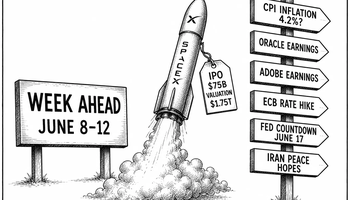




 Please wait processing your request...