
 AU
AU
 UK
UK
 CA
CA
 NZ
NZ
 IND
IND

 US
US

 Share
Share
 X (Formerly Twitter)
 Whatsapp
 Facebook
 LinkedIn
 Telegram
 Email This Article
 Copy Link
 Summarize with AI
 Chat GPT
 Perplexity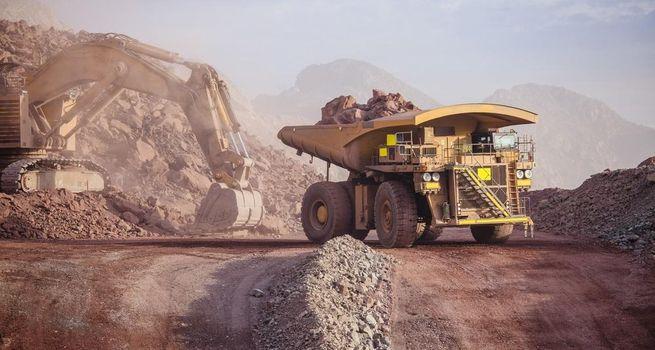
Key Highlights
• Perpetua Resources is advancing the Stibnite Gold Project, a large undeveloped gold deposit located in Idaho.
• The project carries rare dual exposure to gold and antimony, a designated critical mineral.
• Antimony's defense and energy applications give Perpetua a strategic angle beyond typical gold developers.
• As a pre-production company, Perpetua faces permitting, financing and construction milestones before revenue.
Few junior mining stories blend precious metals with national-security themes as directly as Perpetua Resources Corp. (NASDAQ:PPTA). While most gold developers live or die on grade, tonnage and the prevailing bullion price, Perpetua adds a second dimension that has captured the attention of policymakers and resource investors alike: antimony. This metalloid, largely supplied by overseas producers, has crept up the list of materials considered essential to Western defense and industrial supply chains. Perpetua's flagship Stibnite Gold Project in central Idaho contains meaningful quantities of both gold and antimony, creating a narrative that few peers can replicate. For investors, the appeal is a company that offers leverage to a rising gold market while simultaneously tapping into a domestic critical-minerals theme. Yet the path from a permitted deposit to a producing mine is long, capital-intensive and uncertain.
Company Overview
Perpetua Resources is a development-stage company whose entire identity centers on the Stibnite Gold Project, situated in a historic mining district in Idaho. The site is not virgin ground; it was mined during earlier eras, including periods when antimony from the area supported wartime needs. That legacy left behind environmental challenges, and Perpetua has framed its modern plan partly as a redevelopment-and-remediation effort that would restore degraded land while producing metals. The company is not yet a producer, meaning it generates no meaningful operating revenue and instead funds activities through equity raises, partnerships and, potentially, government-linked financing. Its workforce, technical studies and corporate energy are oriented toward moving the project through permitting and toward a construction decision.
Because Perpetua is effectively a single-asset business, the value of the company is tightly bound to the perceived economics, permitting progress and eventual production profile of Stibnite, making it a focused but concentrated way to gain exposure to a specific North American gold-and-antimony opportunity.
Why the Stock Is in Focus
Perpetua Resources draws outsized attention relative to its size for several reasons. First is the antimony angle. As Western governments increasingly scrutinize dependence on foreign suppliers for materials used in ammunition, flame retardants, batteries and other applications, a domestic source of antimony becomes strategically interesting. Stibnite is frequently cited as one of the few sizable potential US sources, which elevates Perpetua from a routine gold developer to a company with policy relevance. Second is the sheer scale of the gold resource; large undeveloped US gold deposits are rare, and that scarcity value commands interest. Third, the project's progress through a lengthy federal permitting process has acted as a recurring catalyst, with each milestone shifting sentiment. Finally, the involvement of strategic partners and potential government-supported financing mechanisms has added credibility.
Together, these factors make PPTA a stock that trades not only on gold-price expectations but also on a broader story about reshoring critical-mineral supply chains.
Gold, Silver and Precious-Metals Market Backdrop
The broader precious-metals environment forms the foundation beneath any gold developer, and Perpetua is no exception. Gold has historically functioned as a store of value during periods of inflation anxiety, currency debasement concerns and geopolitical stress. When real interest rates fall or uncertainty rises, investor appetite for gold tends to strengthen, lifting sentiment across miners and developers. Silver, often moving in sympathy with gold, adds an industrial dimension through its use in electronics and solar applications, while the wider precious-metals complex including platinum-group metals reflects a mix of monetary and industrial drivers. For a pre-production name like Perpetua, the prevailing gold price matters less for immediate cash flow and more for the perceived economics of the future mine and the willingness of capital markets to fund development.
A supportive bullion backdrop tends to make financing easier and project valuations more generous, whereas a weak gold tape can starve developers of capital. Antimony pricing, driven by tighter supply dynamics, adds an independent layer to Perpetua's commodity exposure.
Key Catalysts Driving Investor Interest
A handful of catalysts tend to move Perpetua Resources shares. The most consequential is permitting. Because Stibnite sits on federal land and involves environmental remediation, the company must navigate a rigorous review process, and decisions or records tied to that process can trigger sharp reactions in the stock. A second catalyst is project financing; securing the substantial capital required to build a mine of this scale, whether through equity, debt, offtake agreements or government-backed facilities, would mark a pivotal de-risking event. Third, strategic developments around antimony, such as supply disruptions abroad or heightened policy emphasis on critical minerals, can reframe the company's value proposition almost overnight. Updated technical and economic studies that refine grade, cost and production assumptions also serve as catalysts, as do partnerships with established industry players or government agencies.
For investors, the key is recognizing that Perpetua's value is milestone-driven, with discrete events capable of producing outsized moves in either direction depending on outcomes.
Financial and Valuation Considerations
Valuing a pre-production developer like Perpetua Resources differs fundamentally from valuing a cash-generating producer. With no meaningful operating revenue, traditional metrics such as price-to-earnings ratios are not applicable. Instead, investors lean on concepts like net asset value derived from a project's projected future cash flows, discounted back to the present and adjusted for execution risk. The size and grade of the resource, the assumed long-term gold and antimony prices, the projected capital and operating costs, and the timeline to production all feed into such estimates. Because Perpetua is not yet generating cash, it depends on external funding, which can dilute existing shareholders when new equity is issued. The market also assigns a premium or discount based on permitting probability and strategic significance, meaning sentiment can swing the implied valuation considerably.
Investors typically watch the company's cash position, burn rate and funding runway closely, since a single-asset developer must continually demonstrate that it can finance the journey to production without exhausting shareholder patience or capital.
Growth Outlook and Project Pipeline
Unlike diversified miners with multiple assets, Perpetua's growth outlook is essentially the Stibnite story itself. The pathway envisions advancing from permitting toward a construction decision, then through the build phase to commissioning and eventual steady-state production of gold and antimony. Each stage represents both a growth step and a risk gate. Should the project reach production, Perpetua would transition from a speculative developer into a revenue-generating company, fundamentally altering its financial profile and the way the market values it. Beyond the initial mine plan, potential exists for resource expansion through additional exploration around the existing deposit, and for optimization of the production sequence to enhance economics. The antimony component offers a distinct growth narrative, since a reliable domestic supply could attract long-term customers seeking secure sourcing.
However, the entire outlook hinges on successful execution; delays at any stage compress the timeline to value and can erode confidence. The pipeline is concentrated, high-stakes and tightly linked to a single flagship asset.
Major Risks Investors Should Watch
Perpetua Resources carries the elevated risk profile typical of single-asset, pre-production developers, magnified by the complexity of its project. Permitting risk stands out; an adverse decision, legal challenge or prolonged delay could materially affect timelines and valuation. Financing risk is equally significant, as building a large mine demands substantial capital that may require dilutive equity issuance or debt that burdens future cash flows. Construction and execution risk follow, since cost overruns and schedule slippage are common across the mining industry. Commodity-price risk cuts both ways; weaker gold or antimony prices could undermine project economics, while environmental and regulatory considerations remain ever-present given the site's history and federal oversight. Concentration risk is inherent because the company's fortunes rest almost entirely on one project. Finally, broader macroeconomic and capital-market conditions influence the availability of funding for speculative developers.
Investors should weigh these factors carefully, recognizing that the same strategic features that make Perpetua compelling also expose it to event-driven volatility.
What Could Drive the Stock Next
Looking ahead, several developments could shape the next chapter for Perpetua Resources and PPTA shares. Clarity on permitting remains the dominant swing factor; favorable progress would likely be read as substantial de-risking, while setbacks could pressure sentiment. Announcements regarding financing arrangements, particularly any involving government-linked support tied to critical-minerals priorities, could meaningfully reframe the investment case. The trajectory of antimony markets is another potential driver, since tightening global supply or intensifying policy focus on domestic sourcing would reinforce Perpetua's strategic narrative. Movements in the gold price will continue to influence overall risk appetite for developers and the implied value of the deposit. Beyond external factors, the company's own execution, including updated studies, partnership announcements and disciplined capital management, will signal whether it is converting potential into tangible progress.
For a milestone-driven stock, the cadence and outcomes of these catalysts will likely matter more than any single quarter, keeping investor attention squarely on the path toward a construction decision.
Conclusion
Perpetua Resources stands out among gold developers because it tells two stories at once: a precious-metals story rooted in one of the larger undeveloped US gold deposits, and a critical-minerals story built around antimony and supply-chain security. That dual identity gives the company a strategic resonance that few peers can match, and it explains why PPTA commands attention well beyond its current production status, which is none. Yet the same features that make Perpetua compelling also define its risks. As a single-asset, pre-production developer, it must clear permitting, secure significant financing, and execute a complex build before any of its potential translates into revenue. For investors, the takeaway is balance: genuine strategic appeal paired with substantial uncertainty and event-driven volatility.
Understanding where Perpetua sits in its development journey, and tracking the catalysts that will determine whether the Stibnite vision becomes reality, is essential to evaluating this distinctive American mining story on its own analytical terms.

 Jun 29, 2026
_06_29_2026_23_45_58_101524.jpg)



 Please wait processing your request...