
 AU
AU
 UK
UK
 CA
CA
 NZ
NZ
 IND
IND

 US
US

 Share
Share
 X (Formerly Twitter)
 Whatsapp
 Facebook
 LinkedIn
 Telegram
 Email This Article
 Copy Link
 Summarize with AI
 Chat GPT
 Perplexity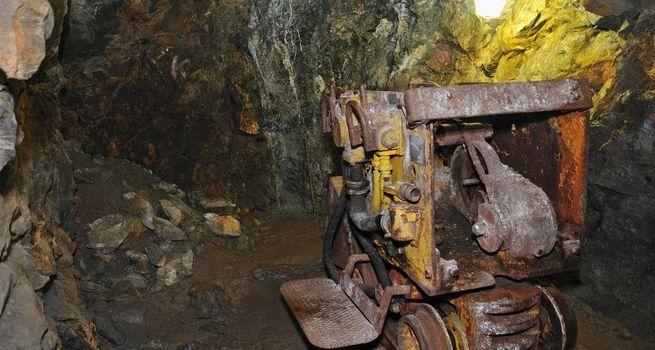
Key Highlights
• Ora Banda Mining is a Western Australian gold producer anchored by the Davyhurst project near Kalgoorlie.
• The Riverina underground development is central to the company's plan for higher-grade, lower-cost production.
• Ora Banda owns and operates its own processing infrastructure, a meaningful advantage in the region.
• A strong Australian-dollar gold price has improved margins and sharpened investor focus.
The Eastern Goldfields of Western Australia have produced gold for well over a century, and the region remains one of the most prolific mining districts on the planet. It is against this storied backdrop that Ora Banda Mining Ltd. (OTCMKTS:ESGFF) is attempting to write a turnaround chapter. Operating around the historic Davyhurst belt northwest of Kalgoorlie, Ora Banda is the kind of small-cap producer that can capture outsized attention when execution improves and the gold price cooperates. Its journey has not been smooth, earlier production attempts struggled with grade, cost and reliability, but a renewed focus on higher-grade underground ore has reshaped the narrative. For investors trying to understand whether this Australian gold story is poised to break out, the key lies in the interplay between operational delivery, the strength of the Australian-dollar gold price, and the company's ability to grow output sustainably.
Company Overview
Ora Banda Mining is focused on the Davyhurst gold project, a consolidated tenement package covering a substantial stretch of prospective ground in the Eastern Goldfields of Western Australia. The asset is built around a centrally located processing plant, which gives Ora Banda the ability to mill its own ore rather than relying on third-party toll treatment, a structural advantage in a region where mill access can be a bottleneck. The project hosts a mix of open-pit and underground deposits, with the underground potential, particularly at Riverina, emerging as the cornerstone of the company's higher-grade strategy. Owning processing infrastructure also creates optionality: it allows the company to consider treating ore from satellite deposits and to control its own destiny on throughput and recovery.
As a single-project producer, Ora Banda's fortunes are tightly bound to the performance of Davyhurst, which concentrates both the opportunity and the risk in one operating hub.
Why the Stock Is in Focus
Ora Banda Mining has moved into focus as a turnaround and re-rating candidate. The earlier phase of operations at Davyhurst was hampered by lower-grade open-pit feed and cost pressures that squeezed margins. The strategic pivot toward higher-grade underground mining, especially at Riverina, offers a path to better unit economics: fewer tonnes mined and milled, but more gold recovered per tonne. When that kind of shift coincides with a strong Australian-dollar gold price, the margin improvement can be dramatic for a small producer with operating leverage. Investors are also drawn to the exploration upside across a large, underexplored tenement holding, which raises the prospect of extending mine life and discovering new sources of high-grade ore.
For a company of this size, even incremental operational wins or drilling success can materially change the investment thesis, which is precisely why small-cap gold turnarounds tend to attract speculative and growth-oriented attention.
Gold, Silver and Precious-Metals Market Backdrop
The macro environment for gold has been notably supportive, with elevated prices underpinned by monetary-policy uncertainty, geopolitical tension and steady central-bank demand. For Australian producers, an additional layer matters: the Australian-dollar gold price. Because Ora Banda earns revenue in a metal priced globally in US dollars while paying many costs in Australian dollars, a weaker local currency can lift the realized gold price in domestic terms, expanding margins independently of the US-dollar move. This currency dynamic has historically been a powerful tailwind for the Western Australian gold sector. Silver and other precious metals tend to move alongside gold, reflecting their shared role as monetary and store-of-value assets, though silver carries additional industrial demand sensitivity.
For a small, growth-stage producer like Ora Banda, the prevailing precious-metals cycle is decisive: a strong gold price provides the cash flow needed to fund underground development and exploration, while a downturn would test the durability of the turnaround.
Key Catalysts Driving Investor Interest
Several catalysts shape the Ora Banda Mining narrative. The most important is the ramp-up of the Riverina underground, where successful development and grade delivery would validate the higher-grade strategy and improve the cost profile. A second catalyst is consistent processing-plant performance, since reliable throughput and recovery convert mined ore into realized cash flow. Exploration is a third major driver: with a large tenement package across a fertile gold belt, drilling that extends known deposits or identifies new high-grade zones could reshape the mine plan. Reserve and resource growth, converting prospective ground into defined ounces, supports longer mine life and a more durable valuation. Beyond the asset itself, balance-sheet improvement and the transition toward sustained free-cash-flow generation are closely watched, because they reduce reliance on external funding.
For a small-cap producer, each of these catalysts can have an amplified effect on sentiment given the company's operating leverage.
Financial and Valuation Considerations
Valuing a small-cap gold producer like Ora Banda involves the same conceptual tools used across the sector, price-to-net-asset-value, price-to-cash-flow, enterprise-value-to-EBITDA and free-cash-flow yield, but with greater sensitivity to assumptions, because a single-asset company has less to cushion any operational shortfall. The central financial question is whether the shift to higher-grade underground ore can deliver lower all-in sustaining costs and consistent positive free cash flow. If it does, the company's earnings become more visible and the market may apply a higher multiple; if costs disappoint, the valuation can compress quickly. Capital intensity matters too: underground development and exploration require funding, so the balance between internally generated cash flow and any external financing is a key consideration, since equity raises can dilute existing holders. These are qualitative observations rather than precise forecasts, as exact figures move continuously with the gold price, currency and quarterly results.
The analytical essence is operating leverage cutting both ways.
Growth Outlook and Project Pipeline
Ora Banda's growth outlook is concentrated at Davyhurst, but the project offers multiple avenues for expansion. The clearest is deepening and extending the Riverina underground, where additional high-grade ore would support both production growth and improved economics. Beyond Riverina, the broader tenement package hosts numerous historical workings and undeveloped prospects, some of which could become satellite sources of mill feed. Because the company controls its own processing plant, it has the flexibility to blend feed from multiple deposits and to scale throughput if grade and tonnage allow. Brownfield exploration, drilling near existing infrastructure and known mineralization, is a capital-efficient way to add ounces without the permitting and construction burden of a standalone new mine. The strategic logic is to build a hub-and-spoke model around the central plant, sustaining and ideally growing production over time.
Execution, drilling success and disciplined capital deployment will determine how much of this potential is realized.
Major Risks Investors Should Watch
Ora Banda Mining carries the heightened risk profile typical of a small, single-asset producer. Commodity-price risk is foremost: a sustained drop in the gold price, or a strengthening Australian dollar, would compress margins and could jeopardize the turnaround. Operational and execution risk is concentrated, since any disruption at Davyhurst's mine or plant directly affects the entire company. Underground mining introduces its own technical challenges, including grade variability, ground conditions and development timing. Funding risk is relevant because growth capital may need to be financed, potentially through dilutive equity raises if cash flow falls short. Reserve and resource risk attaches to the need to keep replacing mined ounces to sustain mine life. Broader risks include cost inflation in labor, energy and consumables, which can erode margins, and macro or equity-market sentiment shifts that can move small-cap shares sharply.
For investors, the concentrated nature of the business magnifies all of these factors.
What Could Drive the Stock Next
The next chapter for Ora Banda Mining will hinge on execution at Davyhurst. A successful Riverina ramp-up, with grades and tonnes meeting expectations, would be the strongest validation of the strategy and could materially improve cash generation. Steady plant performance and clear evidence of falling unit costs would reinforce confidence that the turnaround is durable. Exploration results capable of extending mine life or revealing new high-grade ore would add a growth dimension to the story. On the macro side, the Australian-dollar gold price remains a powerful lever: continued strength would magnify margins, while weakness would pressure the thesis. Movement toward sustained free cash flow and a stronger balance sheet would reduce financing risk and support a re-rating. Conversely, operational stumbles, cost overruns or the need for dilutive capital could quickly dampen sentiment.
For this small-cap producer, the combination of delivery and a supportive metals cycle is decisive.
Conclusion
Ora Banda Mining embodies both the promise and the peril of small-cap gold mining. Its renewed focus on higher-grade underground ore at Davyhurst, combined with ownership of its own processing infrastructure and a large exploration footprint, gives it a credible path toward becoming a more profitable and durable producer. Yet its concentration in a single project, its sensitivity to funding, and its dependence on the gold price mean that the margin for error is slim. Whether this Australian gold story truly breaks out will depend on disciplined execution at Riverina, consistent plant performance, exploration success and a cooperative metals cycle. For students of the junior gold sector, Ora Banda offers a vivid example of how operating leverage can reward delivery and punish missteps in equal measure, a dynamic that keeps both the opportunity and the risk firmly in view.

 Jun 29, 2026
_06_29_2026_23_45_58_101524.jpg)

 Please wait processing your request...