
 AU
AU
 UK
UK
 CA
CA
 NZ
NZ
 IND
IND

 US
US

 Share
Share
 X (Formerly Twitter)
 Whatsapp
 Facebook
 LinkedIn
 Telegram
 Email This Article
 Copy Link
 Summarize with AI
 Chat GPT
 Perplexity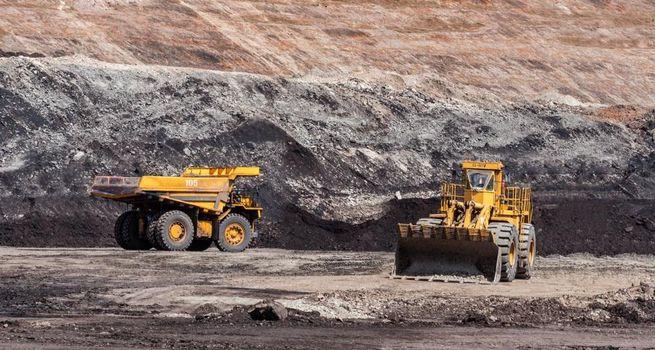
Key Highlights
• OceanaGold operates a diversified portfolio of gold mines spanning North America, the Asia-Pacific and Oceania.
• The Haile mine in South Carolina and the Didipio mine in the Philippines anchor the company's production base.
• A higher gold price backdrop has sharpened investor attention on cash-flow generation and balance-sheet repair.
• Operational execution, cost discipline and reserve replacement are central to the investment narrative.
Few mid-tier gold producers carry a story quite as geographically varied as OceanaGold Corporation (TSX:OGC). With operations stretching from the southeastern United States to the highlands of the Philippines and the South Island of New Zealand, the company straddles multiple regulatory regimes, currencies and orebody types. That diversity has been both a strength and a source of complexity over the years. For investors trying to understand why OceanaGold has periodically drawn fresh attention, the answer usually circles back to a familiar tension: a portfolio with genuine long-life potential set against a history of operational variability that has, at times, kept the market cautious. As gold trades at structurally elevated levels and the company emphasizes consistency, the question many ask is whether OceanaGold is positioned for a re-rating, a shift in how the market values its earnings.
Company Overview
OceanaGold is an intermediate gold producer whose operating footprint reflects decades of acquisitions and development. Its flagship North American asset is the Haile mine in South Carolina, a relatively rare US-based primary gold operation that combines open-pit and underground potential. In the Philippines, the Didipio mine is a gold-copper operation that contributes both precious and base-metal revenue, giving the company a degree of byproduct credit exposure. In New Zealand, OceanaGold has long operated assets on the South Island, including the Macraes operation, one of the country's most established gold mines, alongside historically significant underground operations. This blend of open-pit, underground, gold-only and gold-copper assets gives OceanaGold a production profile that is unusually diversified for a company of its size.
The trade-off is operational complexity: each jurisdiction brings its own permitting framework, labor market, infrastructure and geopolitical considerations, all of which feed into the company's consolidated cost and output picture.
Why the Stock Is in Focus
OceanaGold tends to move back into the spotlight when two forces align: a constructive gold price environment and signs that the company's operations are delivering more predictably. For much of its history, the market discounted OceanaGold's shares partly because of episodes of guidance revisions, permitting friction in the Philippines, and the heavy capital intensity of building out Haile. When those headwinds ease, the narrative can flip quickly. A producer with multiple long-life assets that begins to generate consistent free cash flow at high gold prices becomes a candidate for re-rating, meaning the market may be willing to pay a higher multiple for the same stream of earnings. Investors are also attentive to capital allocation: whether OceanaGold prioritizes debt reduction, reinvestment in its underground growth at Haile, exploration, or returns to shareholders.
Each choice signals management's confidence and shapes how the equity is perceived relative to North American-focused peers that often command premium valuations.
Gold, Silver and Precious-Metals Market Backdrop
The backdrop for precious-metals producers has been defined by elevated gold prices, persistent macroeconomic uncertainty and ongoing central-bank buying. Gold has historically served as a hedge against inflation, currency debasement and geopolitical stress, and periods of monetary-policy ambiguity tend to reinforce its appeal. Silver, often described as a hybrid monetary and industrial metal, can amplify moves in precious metals while adding demand sensitivity tied to solar, electronics and other industrial uses. For a producer like OceanaGold, a higher and more stable gold price lifts margins on every ounce, improving cash flow disproportionately once fixed costs are covered. Because OceanaGold's Didipio mine also produces copper, the company carries some exposure to base-metal cycles and the electrification theme as well.
The broader environment matters enormously: producers do not control the metal price, so the prevailing precious-metals cycle frequently determines whether their operational improvements translate into outsized equity gains or are masked by a softer commodity tape.
Key Catalysts Driving Investor Interest
Several catalysts shape sentiment around OceanaGold. The first is the trajectory of the Haile mine, particularly the development of its underground potential, which could extend mine life and lower the cost profile if executed well. The second is sustained operating stability at Didipio, where renewed permitting clarity historically removed a significant overhang. The third is the longevity of the New Zealand assets, where reserve replacement and exploration success help determine how long these mines keep contributing. Beyond individual sites, investors watch consolidated all-in sustaining costs, free-cash-flow conversion and the pace of deleveraging. A producer that demonstrates it can meet guidance over consecutive periods earns market trust, and that trust is itself a catalyst. Exploration upside, converting resources to reserves and discovering near-mine extensions, can also reframe the long-term outlook.
Each of these levers, individually modest, can compound into a meaningful shift in how the equity is valued.
Financial and Valuation Considerations
From a valuation standpoint, gold producers are commonly assessed through metrics such as price-to-net-asset-value, price-to-cash-flow, enterprise-value-to-EBITDA and free-cash-flow yield, rather than headline earnings alone, because non-cash charges like depreciation and impairments distort reported profits. OceanaGold's valuation debate often centers on whether its diversified, partly non-North-American asset base deserves a discount to peers concentrated in lower-risk jurisdictions. Bulls argue that consistent delivery and free-cash-flow generation should narrow that gap; skeptics point to historical variability and jurisdictional complexity as reasons for caution. Balance-sheet strength, including net debt levels and liquidity, is another focal point, since miners with heavy capital programs can become stretched if metal prices retreat. Importantly, these are qualitative considerations: precise multiples and figures shift constantly with the gold price and quarterly results.
The central analytical takeaway is that OceanaGold's re-rating thesis hinges on converting operational consistency into a higher, more durable valuation multiple over time.
Growth Outlook and Project Pipeline
OceanaGold's growth story is anchored less in greenfield megaprojects and more in extending and optimizing its existing portfolio. At Haile, underground development represents the clearest avenue to grow production and lengthen mine life within an established, permitted operation. At Didipio, optimizing throughput and managing the gold-copper mix supports both precious- and base-metal output. In New Zealand, the priority is reserve replacement and exploration to sustain output from mature assets. Across the portfolio, brownfield exploration, drilling near existing infrastructure, offers a capital-efficient path to add ounces without the permitting and construction risk of entirely new mines. This kind of organic, asset-by-asset growth tends to be lower-risk than transformational acquisitions, though it can also appear less dramatic to the market.
The key question for investors is whether OceanaGold can demonstrate a multi-year runway of stable-to-growing production and falling unit costs, which would underpin confidence in its long-term cash-generating capacity.
Major Risks Investors Should Watch
OceanaGold carries the risks common to all gold producers, plus several specific to its footprint. Commodity-price risk is paramount: a sustained decline in gold would compress margins and could quickly undermine the re-rating thesis. Operational risk is elevated by the diversity of orebodies and mining methods, where a problem at any single asset can disproportionately affect consolidated results. Jurisdictional and political risk is most pronounced in the Philippines, where permitting, taxation and regulatory frameworks have historically been sources of uncertainty. Currency movements across the US dollar, Philippine peso and New Zealand dollar affect costs and reported results. Execution risk attaches to underground development at Haile, where delays or cost overruns could disappoint. There is also reserve-depletion risk: mines are finite, and failure to replace ounces shortens mine life and pressures valuation.
Finally, broader macro and equity-market sentiment can swamp company-specific progress, leaving even well-run producers subject to forces beyond their control.
What Could Drive the Stock Next
The next leg of OceanaGold's story will likely be written by execution. Consistent quarterly delivery that meets or beats guidance is the single most powerful driver, because it rebuilds the market trust that re-ratings depend on. Progress at Haile's underground, evidence of stable Didipio operations, and exploration results that extend mine lives would each reinforce a constructive narrative. On the macro side, the direction of gold remains decisive: a firm or rising price magnifies the impact of every operational win, while a falling price can overshadow genuine progress. Capital-allocation signals, debt reduction, disciplined reinvestment, or the introduction of shareholder returns, will also shape perception. Conversely, guidance cuts, permitting setbacks or cost inflation could quickly reset expectations lower. For OceanaGold, the interplay between a supportive metals cycle and demonstrable operational reliability is the crux of what could move the shares from here, in either direction.
Conclusion
OceanaGold sits at an intriguing crossroads. Its diversified portfolio of long-life gold assets gives it real optionality, while its history of operational variability has historically tempered the market's enthusiasm. The re-rating thesis is not about a single mine or quarter; it is about whether the company can string together enough consistency to convince investors that its earnings deserve a richer multiple. A supportive gold market amplifies the stakes, magnifying both the rewards of execution and the consequences of stumbles. For those studying the mid-tier gold space, OceanaGold offers a textbook example of how operational reliability, jurisdictional risk and commodity leverage intersect to shape valuation. Whether the re-rating materializes will depend on factors both within and beyond the company's control, a reminder that, in mining, delivery and the metals cycle must move together.

 Jun 29, 2026
_06_29_2026_23_45_58_101524.jpg)

 Please wait processing your request...