
 AU
AU
 UK
UK
 CA
CA
 NZ
NZ
 IND
IND

 US
US

 Share
Share
 X (Formerly Twitter)
 Whatsapp
 Facebook
 LinkedIn
 Telegram
 Email This Article
 Copy Link
 Summarize with AI
 Chat GPT
 Perplexity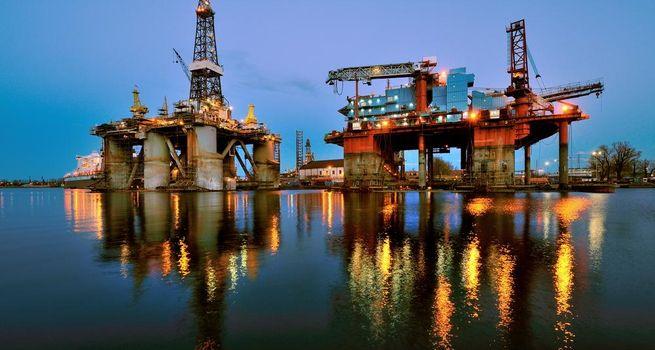
WaterBridge Infrastructure stock fell 5.77% after sponsor-linked holders sold nearly 5.9 million shares, extending WBI’s two-session decline.
Key Highlights
- WBI fell 5.77% to approximately $28.25 in the latest intraday trading.
- The stock has lost roughly 14.9% across two consecutive sessions.
- Sponsor-affiliated entities sold nearly 5.9 million shares for about $177.1 million.
- The transaction raised the tradable Class A float but did not provide cash to WaterBridge.
WaterBridge Infrastructure LLC (NYSE:WBI) traded near $28.25 in the latest supplied intraday update, down $1.73 from its previous close of $29.98.
The shares opened at $29.64, briefly reached $30.15 and then declined to a session low of approximately $28.16. Trading volume stood near 166,000 shares.
Today’s decline follows a 9.67% fall in the preceding session. Combining the two moves, WaterBridge shares have lost approximately 14.9% from their estimated level before the selloff began.
The continuing weakness appears linked primarily to a large secondary share sale by entities connected with WaterBridge’s major sponsors rather than a deterioration disclosed in the company’s operating business.
Sponsor Entities Sold Nearly $177 Million of Shares
A regulatory filing shows that NDB Holdings, Desert Environmental Holdings and WBR Holdings sold a combined 5,894,826 Class A shares on June 22 at approximately $30.05 per share.
The transaction generated proceeds of roughly $177.1 million for the selling holders. Because this was a secondary Rule 144 sale, the money went to the existing investors rather than WaterBridge itself. The company did not raise new operating capital from the transaction.
The scale of the sale helps explain the pressure on WBI. A block approaching six million shares can materially increase available supply, particularly for a company that only entered the public market in September 2025.
WaterBridge priced its initial public offering at $20 per share and sold 31.7 million Class A shares, excluding the underwriters’ additional option. Even after the latest decline, WBI remains above its IPO price, potentially allowing early holders to realise substantial gains.
The Transaction Is More Complex Than Ordinary Dilution
Before completing part of the sale, NDB Holdings and Desert Environmental Holdings redeemed approximately 4.46 million operating-company units and cancelled an equal number of Class B shares in exchange for Class A shares.
This structure reflects WaterBridge’s public-company arrangement. OpCo units and associated Class B shares can be exchanged for listed Class A equity.
The conversion created additional publicly tradable Class A shares, but it did not represent conventional economic dilution in the same way as issuing shares to raise fresh capital. The sellers already held an economic interest through the operating-company units.
The more immediate market effect is an expansion of the Class A float and a visible reduction in sponsor exposure. Investors may also be considering whether additional units could be converted and sold later.
However, the filing shows that the affiliated entities retained substantial holdings after the transaction, including more than 51 million OpCo units and corresponding Class B shares. The sale was therefore a meaningful liquidity event, but not a complete sponsor exit.
WaterBridge’s Operating Model Remains Infrastructure-Led
WaterBridge operates an integrated water-infrastructure network serving oil and natural-gas producers, primarily in the Delaware Basin.
The company gathers, transports, recycles, handles and disposes of produced water under contracts with exploration and production companies. Its scale and interconnected pipeline network allow customers to outsource water management rather than build separate systems for individual drilling operations.
This model can produce relatively stable fee-based revenue compared with businesses directly selling crude oil or natural gas. Nevertheless, WaterBridge remains indirectly exposed to energy-market activity.
Lower commodity prices may not immediately reduce contracted fees, but a prolonged reduction in drilling, well completions or production growth could eventually affect water volumes moving through the network.
Headline Valuation Requires Context
The supplied trading screen showed a trailing price-to-earnings ratio above 400 and earnings per share of approximately $0.07.
That multiple is inflated by a very small earnings base and may not provide a useful standalone assessment of the infrastructure business.
WaterBridge reported first-quarter net income attributable to the publicly listed company of approximately $3.5 million, equivalent to diluted earnings of $0.08 per Class A share. The company also had approximately 47 million Class A shares and 76.4 million Class B shares outstanding in early May.
Investors may therefore place greater emphasis on adjusted earnings, cash flow, contracted volumes, capital expenditure and leverage than on the headline trailing P/E ratio.
What Could Shape WBI Shares Next?
The first issue to monitor is whether sponsor-affiliated entities disclose additional conversions or share sales. Further transactions could maintain an equity overhang even if WaterBridge’s underlying operations remain stable.
Trading around the $30.05 sponsor-sale price may also remain important. That level now represents a visible reference point for both existing holders and investors assessing the scale of the block transaction.
The company’s next financial update may provide evidence on water volumes, customer activity, operating margins and capital requirements. Those fundamentals will determine whether the recent decline represents mainly a temporary ownership transition or a broader valuation reassessment.

 Jun 23, 2026




 Please wait processing your request...