
 AU
AU
 UK
UK
 CA
CA
 NZ
NZ
 IND
IND

 US
US

 Share
Share
 X (Formerly Twitter)
 Whatsapp
 Facebook
 LinkedIn
 Telegram
 Email This Article
 Copy Link
 Summarize with AI
 Chat GPT
 Perplexity
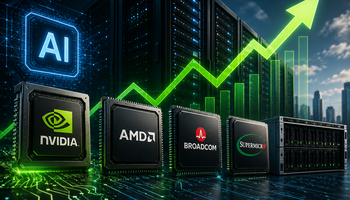
Advanced Micro Devices stock in focus as AI chip competition heats up, with Data Center, CPUs and GPUs shaping the AMD Investment story.
Key Highlights
- AMD is a major Nasdaq-listed semiconductor company competing in CPUs and AI accelerators.
- AI chip competition has intensified, with multiple players vying for hyperscaler workloads.
- AMD's data-center Business is a key growth engine for the broader stock narrative.
- Investors track product cycles, customer concentration and macro signals around AMD.
What happened?
On 21 May 2026, Advanced Micro Devices (NASDAQ:AMD) remains a prominent Nasdaq-listed semiconductor name as investors continue to assess the company's position in the increasingly competitive AI chip market. AMD's stock has been a frequent talking point alongside other major chip players in recent sessions.
Based on the latest available market information, AMD's product strategy across CPUs, GPUs and AI accelerators has supported sustained investor interest. Each new announcement on data-center wins or product cycles tends to influence both AMD's stock and the broader semiconductor complex.
Macro conditions and industry dynamics, including hyperscaler capex plans, AI software developments and global trade considerations, continue to provide a context against which AMD's individual story plays out.
AMD's roadmap announcements at industry events have drawn attention from data-center customers and investors alike. New high-end CPU and accelerator launches are often viewed as marquee moments that can shift competitive dynamics.
Supply-chain commentary from AMD's Manufacturing and packaging partners has been increasingly influential. Capacity expansions, advanced packaging volumes and Yield trends can all affect AMD's ability to deliver on customer commitments.
Investors have closely watched commentary from AMD's executives at major industry events. These appearances often include product demonstrations, customer testimonials and forward-looking discussions that can influence sentiment.
Why it matters
Nasdaq AMD matters because Advanced Micro Devices is one of the few credible challengers to the dominant AI accelerator providers. Its progress in winning AI workloads can have significant implications for the broader semiconductor sector and for index performance.
From a competitive standpoint, AMD's success or struggles influence pricing power, technology roadmaps and capacity decisions across the chip industry. This makes the company's developments a useful benchmark for understanding the AI hardware ecosystem.
For investors, AMD offers exposure to multiple parts of the semiconductor value chain, including data-center CPUs, AI accelerators, gaming GPUs and embedded products. Sustained moves in the stock can therefore reflect a mix of industry trends.
AMD also plays an important role in many semiconductor ETFs, which means moves in its stock can affect sector-level products tracked by both retail and institutional investors.
AMD's role as a credible challenger in AI accelerators provides important optionality for hyperscalers and large enterprises. Diversifying supplier relationships is increasingly viewed as a strategic priority in the AI infrastructure space.
Market background
Advanced Micro Devices is a US semiconductor company headquartered in Santa Clara, California. It is listed on the Nasdaq under the ticker AMD and designs CPUs, GPUs, AI accelerators and adaptive computing products.
Over the past several years, AMD has expanded its presence in data-center CPUs through its EPYC product line, while building out its GPU and AI accelerator portfolio for both Training and inference workloads. The company has also pursued acquisitions to broaden its technology stack.
AMD's customer base includes major hyperscalers, enterprise data-center operators, PC OEMs and gaming console makers. Its position across multiple high-growth markets contributes to a diversified, though competitive, business profile.
Heading into mid-2026, AMD competes against larger and more specialized rivals in AI accelerators, while continuing to defend and grow its CPU Market Share. The broader macro environment, including AI capex cycles and Federal Reserve policy, also shapes its trading.
AMD's Acquisition history, including major deals that have expanded its presence in adaptive computing and data-center networking, has shaped the company's strategic profile. These acquisitions have given AMD additional tools to compete in increasingly complex compute markets.
AMD's competitive positioning has improved significantly over the past decade, supported by strong execution on data-center CPU roadmaps and the buildout of a more comprehensive AI accelerator product line.
Key drivers to watch
AI accelerator Demand and product execution remain central drivers for AMD. Investors track how the company's AI products fare relative to peer offerings and custom silicon from hyperscalers.
Data-center CPU performance is another key driver. EPYC processor adoption affects Revenue, gross margins and AMD's broader competitive narrative.
PC and gaming markets, while more cyclical, still play a role in AMD's overall results. Trends in consumer electronics demand, gaming consoles and discrete GPUs influence the company's financials.
Macro factors, including Federal Reserve policy, semiconductor Capital spending cycles, currency moves and geopolitical considerations around chip exports, also shape AMD's stock dynamics.
Operating-Margin trends are a focus for AMD investors. As the company invests in expanding its data-center and AI businesses, the balance between revenue growth and Operating Leverage is closely watched.
Channel-check reports from research firms can offer early signals about AMD's traction in data-center deployments. Industry analysts often look for early signs of customer adoption beyond initial design wins.
Long-term roadmap commitments around accelerated computing, including multi-year product plans for both CPUs and accelerators, are key for evaluating AMD. Consistent execution can support the company's competitive narrative over time.
What investors are watching next
Investors will track AMD's upcoming Earnings releases and product announcements. Updates on AI accelerator revenue, data-center CPU traction and forward guidance will be closely scrutinized.
Hyperscaler capital-expenditure trends and AI workload deployment patterns remain pivotal. AMD's progress in capturing AI workloads alongside rivals is a key part of the story.
Industry developments, including peer earnings, custom silicon announcements and changes in chip-export rules, are on the radar for the Nasdaq AMD outlook.
Customer announcements, particularly from large hyperscalers and enterprise data-center operators, will continue to shape AMD's narrative. Even partial wins in marquee accounts can be significant for sentiment.
Investors will also watch AMD's progress in adjacent areas such as adaptive computing platforms, which can address specific workloads in industries like communications, automotive and industrial automation.
Investors will also pay attention to AMD's progress in winning AI workloads across both training and inference, since the balance between these segments can shape product roadmaps, customer relationships and long-term revenue potential.
Outlook
The near-term outlook for AMD continues to depend on its ability to execute across CPUs, GPUs and AI accelerators while managing intense competition. Strong product cycles and customer wins have historically supported the stock's narrative.
Risks include the pace of AI capex cycles, share shifts within accelerators, cyclicality in PC and gaming markets and macro pressures from interest rates and policy decisions. Investors are watching how AMD balances growth investments with profitability.
Based on the latest available market information, Nasdaq AMD remains an important reference point within the AI chip story, with traders ready to react to fresh data, earnings and macro catalysts.
AMD's longer-term outlook will depend on its ability to consistently deliver competitive products in AI accelerators while maintaining strength in CPUs and broadening its software ecosystem to support customer adoption.
If AMD continues to invest in AI accelerators, software ecosystems and adaptive computing, the company could remain a credible long-term competitor in the AI infrastructure market, with implications for its Nasdaq listing.
Long-term, AMD's success in AI chips will depend on its ability to maintain pace with rapidly evolving customer requirements while building a software ecosystem capable of supporting widespread adoption.
As demand for AI compute continues to evolve, Nasdaq AMD will remain part of the broader conversation about how multiple suppliers, including custom silicon from cloud providers, share the rapidly expanding AI infrastructure pie.


 Jun 05, 2026



 Please wait processing your request...